Breaking the Silence on Elder Abuse – – A Note from Amercian Friends of HelpAge India
June 11, 2026
On World Elder Abuse Awareness Day, we confront an uncomfortable truth: millions of elders in India are suffering in silence — and together, we can change that. Every June 15, the world pauses to recognize World Elder Abuse Awareness Day — a day established by the United Nations to shine a light on one of the most underreported and misunderstood human rights violations of our time. As the new Executive Director of American Friends of HelpAge India (AFHI), this day holds profound meaning for me, both professionally and personally.
I have spent my career working at the intersection of human rights and community development, and time and again I have witnessed how societies fail their most vulnerable members — not through dramatic acts of cruelty, but through quiet neglect, dismissal, and silence. Elder abuse is precisely that kind of invisible crisis.
“An elder being abused in their home, by the very family they devoted their life to, rarely raises their voice. Not because the pain isn’t real — but because they fear losing the only roof over their heads.”
The Reality We Cannot Ignore
India is home to over 140 million elderly citizens, and that number is projected to reach 300 million by 2050. Behind these statistics are real people — grandmothers who raised families, grandfathers who built communities — now facing abuse in the very homes they once called their own. HelpAge India’s landmark research provides a sobering window into this crisis. Their surveys, conducted across cities and states, reveal patterns of abuse that cut across income levels, geographies, and family types. The abuse is rarely a single incident — it is often chronic, compounding over months and years, leaving elders trapped in cycles of fear and dependence.
Why Abuse Thrives in the Shadows
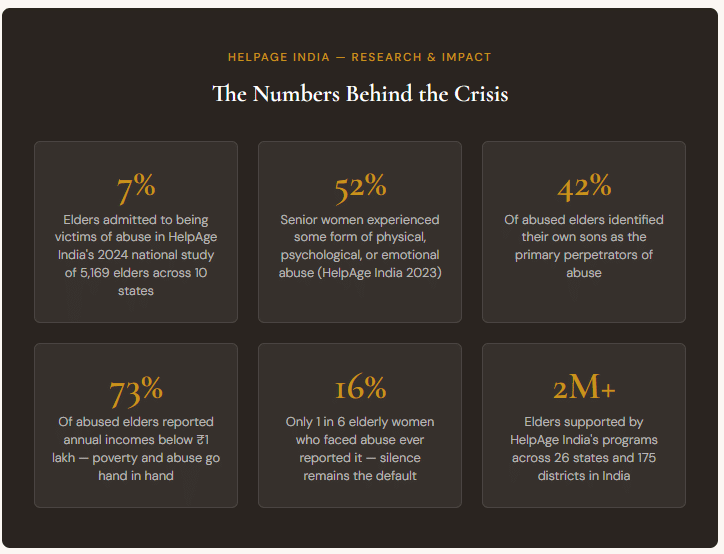
The data tells a difficult story. Financial dependency is a key driver — when an elder has no income, no savings, and no property in their name, speaking out against an abuser who also happens to be their caregiver becomes an act of extraordinary courage. HelpAge India’s research found that the overwhelming majority of abused elders had incomes below ₹1 lakh annually — a threshold that places them entirely at the mercy of family members for survival.
For elderly women, the situation is especially dire. Widowed, illiterate, and financially excluded, over half of India’s senior women have experienced some form of abuse — yet the vast majority never report it. Fear of abandonment, social stigma, and lack of awareness about legal protections conspire to keep them silent.
It is worth noting, too, what HelpAge India’s surveyors found in a statistic that speaks volumes: 5% of elders declined to answer the question about abuse at all. In research terms, that silence is itself a response. Those who could not say yes, could not bring themselves to say no either.
HelpAge India: 46 Years of Standing With Elders
For over four decades, HelpAge India has been at the forefront of the fight against elder abuse and neglect. Working in 26 states, across 175 districts, reaching over 2,400 villages and more than 2 million elders, HelpAge India has built one of the most credible and far-reaching elder care ecosystems in the world.
Their work encompasses mobile health units that bring care to remote communities, livelihood programs that restore financial independence to elders, advocacy that pushes government and corporations to act, and on-the-ground crisis response for victims of abuse. Every rupee invested in HelpAge India’s programs translates directly into dignified life for a vulnerable elder.
Recognition of Excellence: > HelpAge India holds the prestigious CRISIL VO1A grading — the highest possible rating — signifying very strong program delivery and financial proficiency. They also hold the GuideStar India Platinum certification (2023) for exemplary transparency. Your donations are in trusted hands.
What Can Each of Us Do?
Awareness is only the beginning. Elder abuse persists because it is invisible — hidden behind closed doors, hushed in family conversations, and absent from public discourse. Changing this requires all of us. It requires donors who fund the programs that reach elders before abuse becomes irreversible. It requires volunteers who lend their time and skills to HelpAge India’s on-the-ground work. And it requires advocates who refuse to look away.
As the Executive Director of AFHI, I am committed to bridging the Indian diaspora in the United States with the urgent work happening on the ground in India. Every dollar raised through AFHI goes directly to supporting HelpAge India’s life-changing programs — programs that give elders not just safety, but dignity, health, and hope.
This June 15, I ask you to make elder abuse awareness more than a hashtag. Make it a commitment.
Take Action Today
Your support — whether financial or in your own time — has the power to transform the life of an elder living in fear, poverty, or neglect.
- Donate: Visit American Friends of Helpage India Inc – Support Us Now
- Volunteer/Contact/Questions: Email us directly at shweta.chooramani@af-hi.org
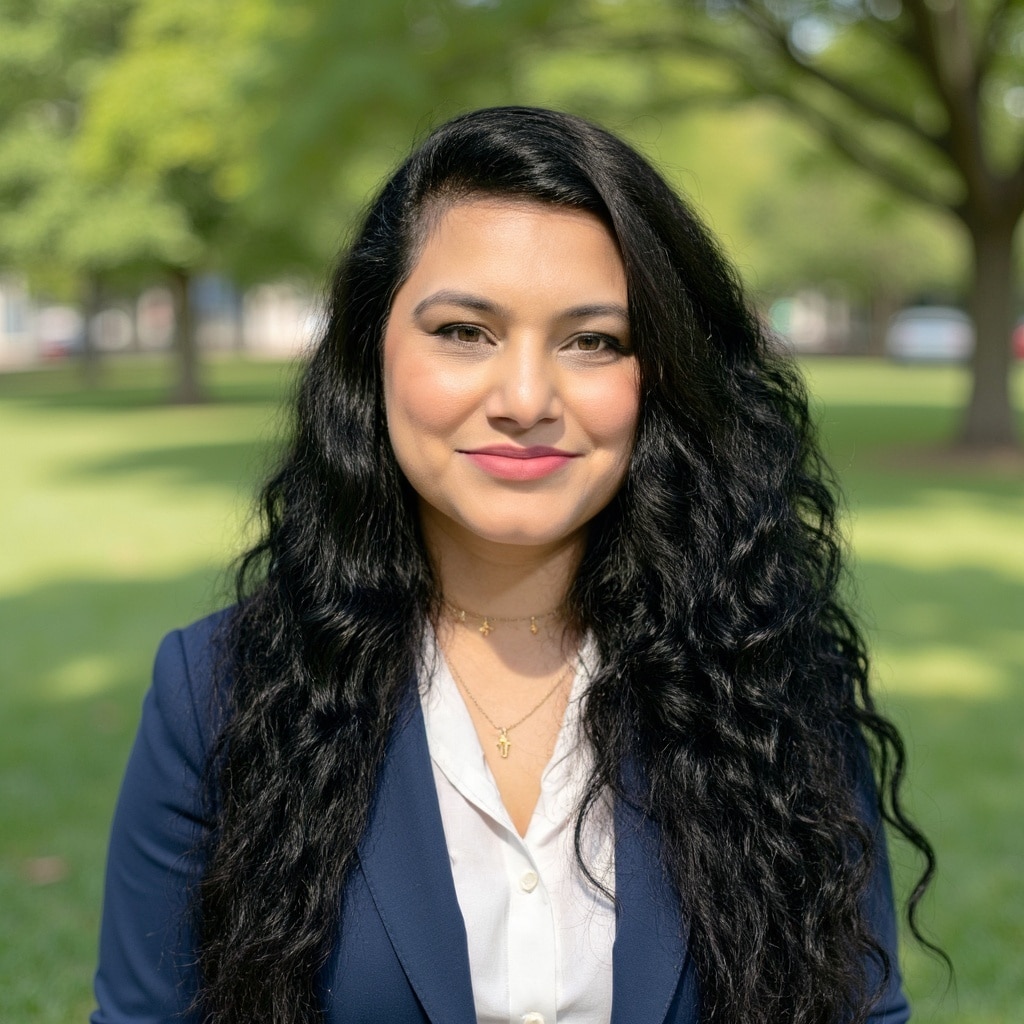
About the Author
Shweta Chooramani is the Executive Director of American Friends of HelpAge India (AFHI), where she leads strategic fundraising, donor engagement, and partnerships to support the health and well-being of vulnerable older adults in India. With more than 20 years of experience in philanthropy, public health, and nonprofit leadership, she has held senior fundraising and program management roles with organizations including the American India Foundation, Asante Africa Foundation, Pearson India, and Sightsavers. Shweta holds a Master of Public Health from the University of California, Berkeley, an MBA in Healthcare Management, and is passionate about connecting the Indian diaspora with meaningful opportunities to create lasting social impact.