Breathing Through the Unknown: Lung Cancer, the Indian Diaspora, and New Reasons for Hope
July 7, 2026
By Anju Bhargava, Retired Executive and Lung Cancer Survivor · Co-authored with Dr. Daniel Gomez, NYU Langone · Dr. Robert Daly, Memorial Sloan Kettering Cancer Center
Lung cancer kills more people worldwide than any other cancer—yet most of us still picture it as a smoker’s disease. What if you were told that non-smoking women of South and East Asian heritage are among the fastest-growing groups being diagnosed? That the lungs have no nerves, so tumors grow silently, causing no pain? That by the time many people find out, the cancer has already advanced? This is not a distant statistic. It is the story of our community.
A Diagnosis No One Sees Coming
Nearly four years ago, during a routine heart health checkup, I was unexpectedly diagnosed with stage 4 lung cancer. I was shocked—not only am I not a smoker, but the disease had already advanced without any perceptible symptoms. I had no family history of cancer for at least three generations, and I was healthy and active. For many, detection comes as a complete surprise, as it did for me.
Non-smoking women, especially those of Pan-Asian heritage, are being diagnosed at alarmingly high rates. Confirming the diagnosis and assembling the right medical team took a few months. A lung tissue biopsy revealed an Epidermal Growth Factor Receptor (EGFR) mutation in the right lower lobe, which allowed me to receive targeted therapy with Osimertinib. EGFR mutations are genetic alterations associated with non-small cell lung cancer and are critical in guiding treatment with targeted therapies such as tyrosine kinase inhibitors.
Because of the stage 4 diagnosis, chemotherapy and radiation were not the optimal treatment given the EGFR mutation. My first line of defense was the pill, Osimertinib, which I began taking in late November 2022. By March, metastasis to the lymph nodes had resolved, and the cancer was confined to the right lower lobe. In August 2023—within eight months—my doctors removed the primary tumor to help delay any progression. The lobectomy confirmed no active cancer cells, achieving “no evidence of disease” (NED) status. Following the surgery, my thoracic oncologist, Dr. Robert Daly at Memorial Sloan Kettering Cancer Center described it as “the best possible outcome one could hope for.”
Today, I am monitored closely with quarterly PET and low-dose CT scans and liquid biopsies for early detection—part of what my oncology team calls “assertive surveillance.” Drs. Robert Daly and Daniel Gomez at Memorial Sloan Kettering Cancer Center guided this approach from the start. My treatment plan also incorporates an integrative medicine framework: acupuncture, massage, yoga, meditation, and supplements.
Why Our Community Is at Higher Risk
The rise of lung cancer among non-smokers is not random. Environmental factors seem to play a significant and underappreciated role—and the Indian diaspora faces a unique intersection of risks.
I worked in lower Manhattan during the 9/11 attacks and was exposed to dust and toxic fallout—an impact that appeared more than two decades later. Additionally, I had exposure to higher radon levels in my home for several years. My younger sister, who lives in Delhi and faces extreme air pollution daily, was recently diagnosed with the same EGFR-mutated lung cancer and is being treated with the same targeted therapy. Although this form of cancer is not hereditary and I carry no known genetic markers, recent data has also shown that environmental factors such as air pollution and radon can contribute to the development of lung cancer.
Air pollution, indoor cooking smoke, radon exposure, second-hand tobacco smoke, and occupational hazards are all factors that could disproportionately affect us—both in India and abroad. The Indian diaspora carries these environmental exposures across generations, and yet research focused on our community remains limited. We need more voices from within our community to advocate for targeted studies that allow us to better understand the risk factors and appropriate screening approaches for those directly within our community.
Early Detection Changes Everything: The Lesson from Sharmila Tagore
Not every story has to start at stage 4. Veteran Bollywood actress Sharmila Tagore was diagnosed with stage zero lung cancer—also called carcinoma in situ—a fact her daughter Soha Ali Khan shared publicly in 2025. At stage zero, cancer cells are present only in the innermost lining of the lung and have not spread to surrounding tissue. Because it was caught so early, the cancerous cells were surgically removed without the need for chemotherapy. Sharmila Tagore has since resumed her normal life.
Her case is rare precisely because stage zero lung cancer is usually asymptomatic—there may or may not be a cough, generally no pain, and few warning signs. It is typically found only through proactive, routine screening. And ideally, lung cancer would always be caught at this early stage—straightforward to treat and with excellent outcomes. Ms. Tagore’s story resonates because it ends well, and it is also a powerful reminder: if you have risk factors—environmental exposure, any lung-related issue, or a family member with lung cancer—advocate for yourself and ask your doctor about low-dose CT screening. In many patients, early detection will not be based solely on luck. It is the manifestation of vigilant preparation.
Caring for the Whole Self: Body, Mind, and Spirit
A cancer diagnosis is not only a physical journey. It reshapes your identity, your relationships, and your sense of the future. For me, Vipassana meditation and Vedic Hindu philosophy and practice have been anchors—helping me maintain equanimity through uncertainty. Meditation is not a luxury or an add-on to treatment; it is part of the treatment. The mind and body are inseparable, and tending to one strengthens the other. There is evidence as well that integrative medicine improves outcomes—enhanced symptom control, fewer hospitalizations, and improved overall survival.1,2
Yoga, meditation, walking, gardening, traveling, and time with my grandchildren, family, and friends have all been part of my healing. My goal is to continue building physical strength so my body is resilient for whatever the future brings. I share this not as a prescription, but as an invitation: whatever grounds you—prayer, community, nature, movement—make space for it. Your mental wellbeing is not separate from your survival. It is part of it.
What We Are Asking For
As members of the Indiaspora community, we have influence—in our families, our professions, our networks, and our governments. Here is how we can use it:
-
Get screened. If you experience a persistent cough, shortness of breath not explained by a recent illness, back pain between the shoulder blades not explained by injury, coughing up blood, or unexplained weight loss—speak to your doctor about low-dose CT lung screening, even if you have never smoked.
-
Test your home. If your neighborhood has environmental risk factors, such as radon, which is odorless and invisible, test every room. Affordable kits and digital devices are readily available.
-
Protect yourself from air pollution. On high pollution days, wear an N95 or KN95 mask outdoors, check your local Air Quality Index (AQI) before going outside, and use a HEPA air purifier indoors—especially in your bedroom.
-
Advocate for research. Support organizations pushing for studies on lung cancer in non-smokers of Asian descent. Our data gap is a health equity issue.
-
Talk about it. Lung cancer carries stigma because of its association with smoking. Break that stigma in your family and community conversations.
-
Take care of your whole self. Physical health and mental wellbeing are not competing priorities. They are the same priority.
Living Forward
As I mark nearly four years since my diagnosis, I do so with immense gratitude—for life, for love, and for the extraordinary medical advances that make survival possible. I cannot say I am “cured,” but today I am alive without active cancer for the past three years, and living fully. Thanks to excellent medical care, the Grace of God, meditation, and unwavering support from my daughter and from friends and family, I have managed to remain relatively equanimous through it all.
May my experience encourage others in our community to seek awareness, advocate for themselves, and find strength even in the most unexpected chapters of life. With assertive surveillance, faith, and a commitment to holistic well-being, I look forward to many more years of good health and purpose.
A Clinical Perspective: New Reasons for Hope
By Dr. Daniel Gomez, MD, MBA, Chair of Radiation Oncology, NYU Grossman School of Medicine · Dr. Robert Daly, MD, MBA, Thoracic Medical Oncologist, Memorial Sloan Kettering Cancer Center
When Anju began her treatment with us, what struck us most was not just her resilience—it was how her case reflects a broader and deeply important shift in how we understand and treat lung cancer. For patients like Anju, with EGFR-mutated non-small cell lung cancer, a diagnosis is no longer what it once was due to evolving treatment paradigms. It marks the beginning of a carefully managed, evolving treatment journey.
Targeted therapies like Osimertinib have transformed outcomes for patients with EGFR mutations. Where once we had only chemotherapy, we now have precision medicines that attack the cancer at its molecular source. For many patients, these treatments offer years of controlled disease with a quality of life that would have been unimaginable a decade ago.
But here is what we want the Indian and Pan Asian community to understand clearly: the hope does not end if and when the first line of treatment stops working. Cancer can develop resistance to Osimertinib over time, and this is anticipated in our treatment planning. When that happens, we do not run out of options. We pivot. A rapidly evolving pipeline of second-line treatments—including next-generation EGFR-targeted therapies, new treatment combinations designed to overcome resistance, and clinical trials—is expanding what is possible for patients. The therapeutic horizon continues to advance, with new approaches designed specifically to overcome resistance and extend both the quantity and quality of life.
Patients also now have another option that they did not have in the past: using techniques like targeted radiation therapy and surgery to keep the cancer controlled so that they can remain on treatments that are tolerated well. Historically, these approaches were only used in patients with early-stage disease. However, we now use them in select stage IV cases, allowing patients to maintain otherwise effective regimens, or to attempt to eradicate all remaining disease. You can ask your doctor if this is an appropriate option in your case, or ask to be referred to a specialist in this field.
The field of thoracic oncology is advancing rapidly, and what is experimental today may be standard of care tomorrow. If we can deliver effective regimens that control disease until that next phase of care, you may find that there are many options available to you if your disease stops responding. An important tenet to remember throughout your treatment is that the more you share your goals of care with your clinical team, the more they can align with you in terms of what they offer for treatment.
In addition, it has become apparent as the science has evolved that “assertive surveillance” is critical. Liquid biopsies, low-dose CT scans, and PET imaging, when appropriate, allow us to detect resistance or progression early—before symptoms appear—so we can adapt the treatment plan proactively rather than reactively. The earlier we identify a change, the more options we have.
Beyond Treatment: Environment, Research, and Hope
Finally, we want to speak directly to the question of environmental risk. The scientific community is increasingly recognizing that air pollution, occupational exposures, and environmental toxins are significant drivers of lung cancer in non-smokers—particularly in South and East Asian populations. This is not a coincidence. It is a signal that demands more research, more funding, and more culturally specific screening protocols. Our community deserves to be at the center of this research agenda, not at its margins.
To anyone in our community reading this who has received a lung cancer diagnosis: please know that you are not facing this alone. You are entering a landscape of active science, compassionate care, and genuine possibility. Seek out a specialized oncology team. Ask about targeted therapy testing. Ask about clinical trials. Ask about techniques such as radiation therapy and surgery. And bring someone with you to your appointments—an advocate who can help you ask the right questions.
Anju’s story is one of hope—not because her path has been easy, but because she has navigated it with courage, with a strong support system, and with the knowledge that medicine is on her side. That same hope is available to others. We just need more people in our community to know it exists.
About the Authors
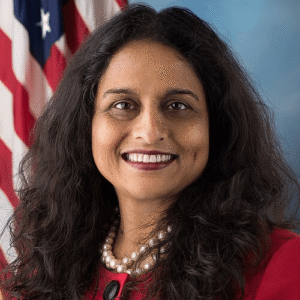
Anju Bhargava is a retired federal executive, former senior banker, and community builder who served as the first Chief Risk Officer at CMS, Deputy Chief Strategy Officer at SSA, and Senior Vice President at Bank of America. A Vedantic teacher and ordained Hindu minister, she was the only Hindu American appointed to President Obama’s Advisory Council on Faith-Based and Neighborhood Partnerships, where she founded Hindu American Seva Communities to promote service (seva), interfaith collaboration, and social justice.
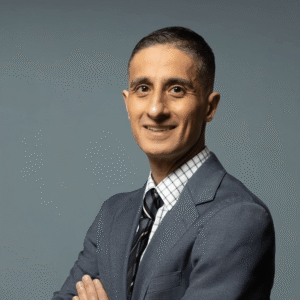
Dr. Daniel Gomez, MD, MBA, is the Chair of Radiation Oncology at NYU Grossman School of Medicine and a leading expert in treating oligometastatic cancers. He previously held key roles at Memorial Sloan Kettering Cancer Center and MD Anderson Cancer Center.
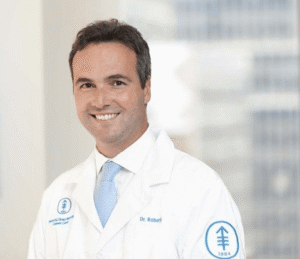
Dr. Robert Daly, MD, MBA, is a thoracic medical oncologist at Memorial Sloan Kettering Cancer Center specializing in lung cancer—including small cell and non-small cell—and mesothelioma. He is also a health services researcher who is invested in innovative cancer care delivery systems that provide high quality, affordable, and sustainable care. He co-founded the Bloomberg New Economy International Cancer Coalition with the goal of improving access to high quality cancer care globally.
References
¹Huang A, et al. Integrative oncology improves outcomes in lung cancer. npj Digital Medicine. 2024. https://www.nature.com/articles/s41746-024-01387-z
²Latte G, et al. Integrative medicine in lung cancer care. JCO Oncology Advances. 2025. https://ascopubs.org/doi/full/10.1200/OA-25-00154