Can Smartphones be the answer to the lack of Computers in Indian Schools for AI skills?
October 14, 2026
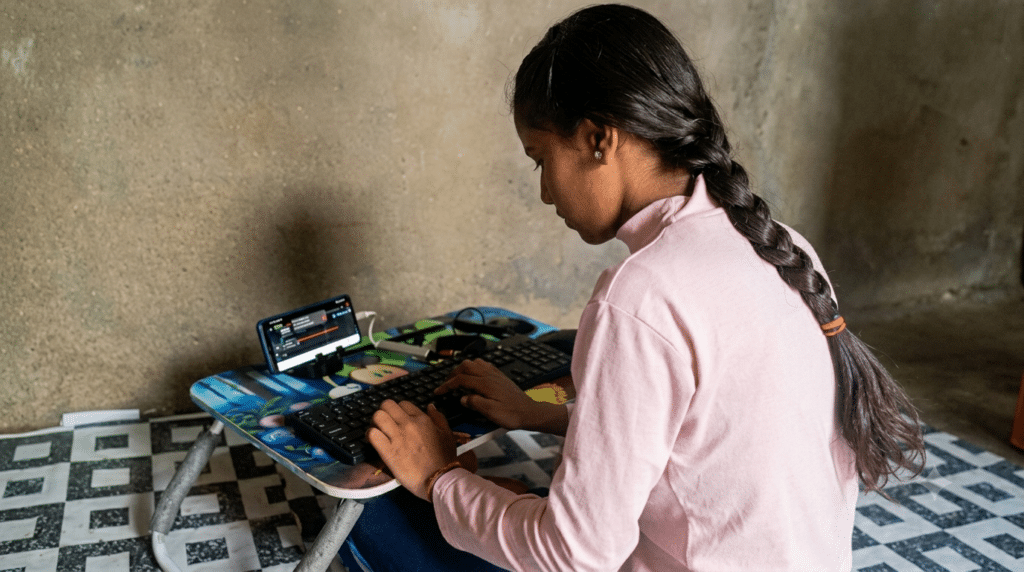
Rekha, a 12th-class government school student from Dewas, Madhya Pradesh
Himanshu is a Class XII student at a Hindi-medium government school in Saharanpur. He built an AI keyboard app for people who need to communicate in English but speak another language first. It is now used in 86 countries, with several international customers paying for it.
He began learning to build with AI two years ago, in Class X, using his father’s smartphone. A teacher at his school introduced him to the program, which reached more than 17,000 government-school students across the district.
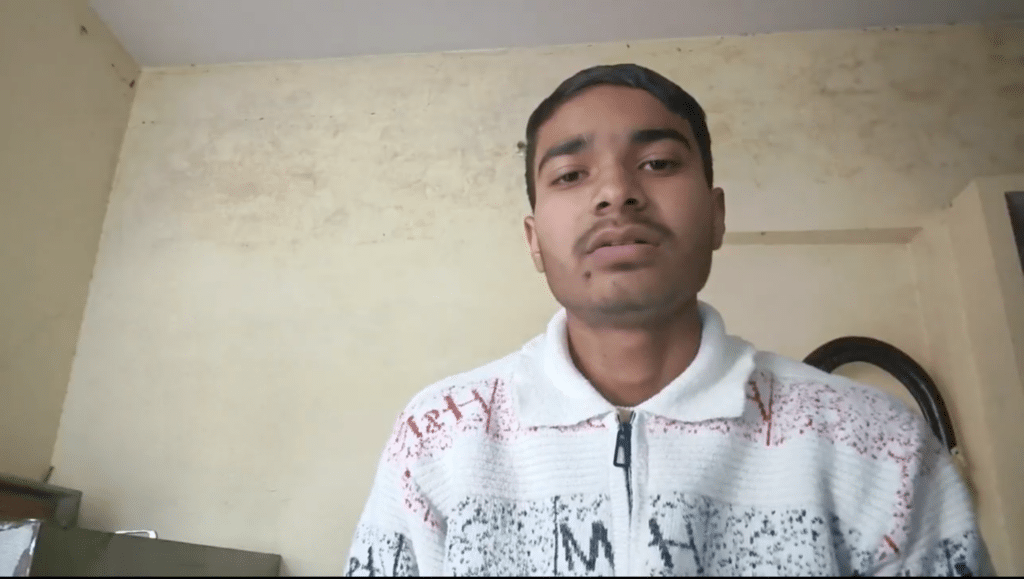
Himanshu, class XII student from Saharnpur, U.P. & the inventor of AI keyboard AuraKeys
Hundreds of kilometres away, young people from government schools are gathering at a startup incubation cell in Churu, Rajasthan. A year ago, the centre was nearly deserted.
Lakshmi and her team of five, all recent government-school graduates, are also among them. They are building a vision-based AI attendance system for local schools and industries. The team has already begun earning revenue by providing technology solutions to local businesses and the government.
They were among more than 18,000 students in Churu who joined CodeYogi Foundation’s smartphone-based AI skilling program. The strongest performers were invited to a month-long residential startup bootcamp in this Incubation centre, fully organised and funded by the district administration and mentored by senior startup professionals and founders.
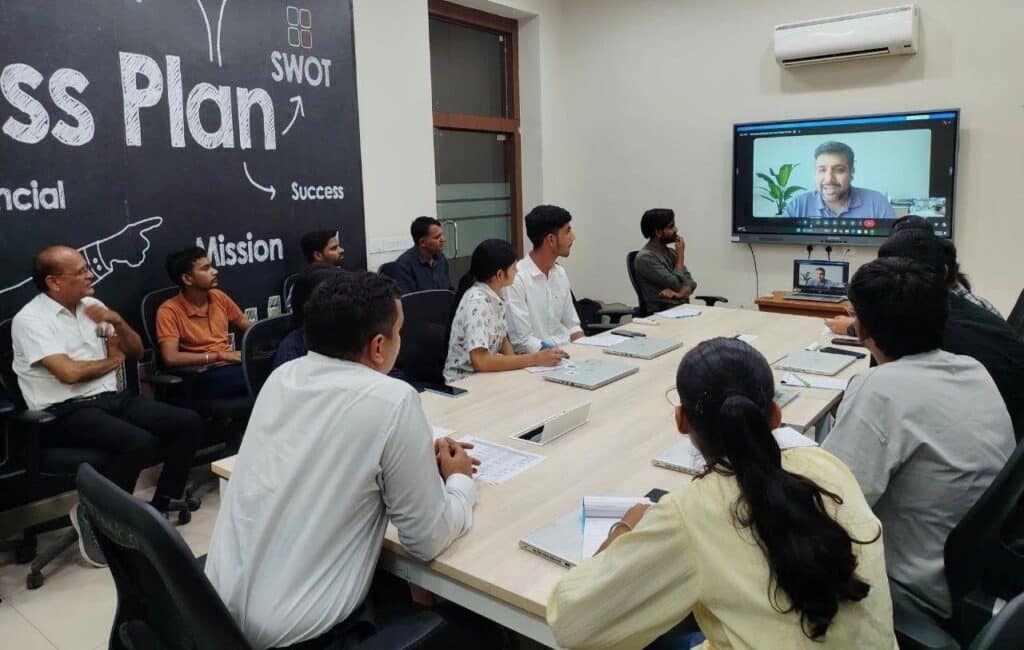
Govt. school students from Churu at the Bootcamp to give their innovations the right direction.
These stories are emerging across more than 100 districts. As of October 2026, over 410,000 students have benefited from CodeYogi’s free AI skilling program. The team behind this effort is lean and made up entirely of program alumni.
Students learn on smartphones their families already have, through a gamified, AI-powered experience. They work through lessons and practical activities that teach them to use and build with AI in their studies, daily lives and careers. An AI guide answers questions and provides feedback as they learn. The model does not require a computer lab or expect teachers to become technology instructors and deliver every lesson.
Our internal surveys highlight the access gap this model aims to address: only 23% of government schools surveyed reported having working computer labs, and just 18% of students said they had received serious digital-skills training in those labs. For most students, the technology shaping the economy remains something they hear about, rather than something they get to use and build with.
I know that distance from experience. I grew up in a village in Meerut, Uttar Pradesh, where a government job seemed like the only respectable path. I was fortunate to learn about the IITs while still in school and receive financial help for coaching. After graduating from IIT in 2010, I decided to pay it forward and returned to my village rather than taking a conventional job in a metro city. I took a remote technology job at a US startup and began teaching technology skills to young people in my spare time.
Most went on to secure great paying jobs. Their progress changed what others in the village thought was possible. That experience shaped my conviction: talent is spread evenly; access is not.
CodeYogi grew from a question: could students in government schools learn to build with technology even where there are no computer labs, specialist teachers or English-language instruction? Today, we work with district administrations to reach students through smartphones their families already have, at no cost to the government. While the model does not depend on teachers delivering the lessons, it must still fit the realities they face.
A teacher at a government school in Saharanpur described the challenge this way: “Most tech education programs are very theoretical and hence often non-engaging for young students. Beyond that, there are so many extra responsibilities forced on Government teachers that the expectation of getting trained on so many new things and then to train students on it is too much to ask often. It’s practically not possible for us, despite our best intentions, to do justice to students with subjects beyond traditional academics.”
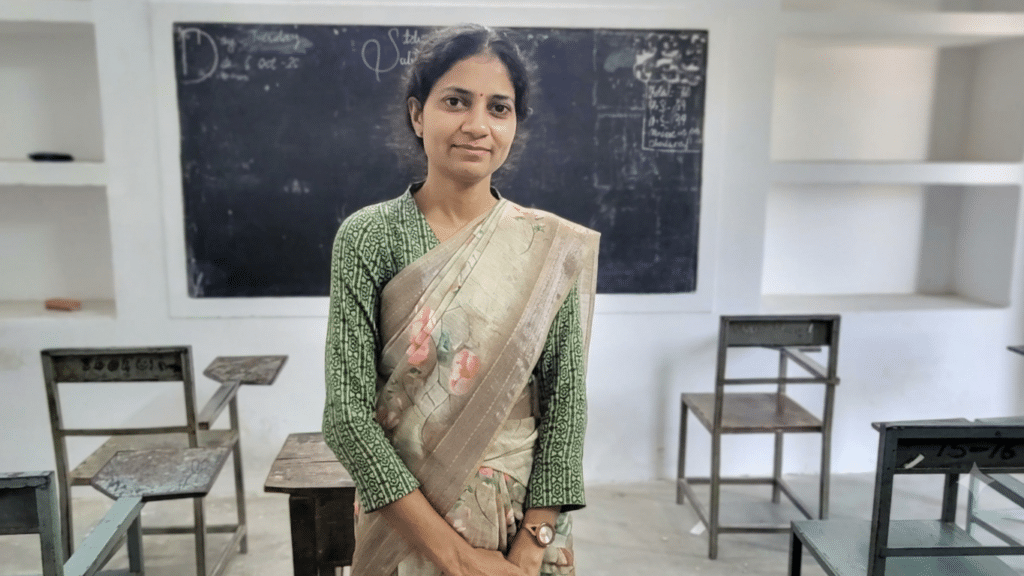
Ms. Chhavi, a government school teacher from JBS Hindu Govt School in Saharanpur, Uttar Pradesh
This is why we designed the whole program to not overburden them with another program, rather use their agency to just motivate the students to attempt this course. And we have seen it work superbly in not only reduced friction but even a progressive uptake in many parts, something which is unheard of in such programs.
Any model intended for Government schools must take teachers’ experiences seriously and fit what they can realistically support.
What is happening in Saharanpur, Churu and other 100 districts of India is one sign of what can happen when students get the chance to build freely, without bounds, on their own devices. India’s startup ecosystem has shown what bold bets can unlock. Education, too, needs the courage to try models that differ from the familiar and make room for students who have never been invited to build.
We are making a bold bet in education and skilling. We invite the diaspora to bring its experience, ideas, and connections to this work and help more students turn access into opportunity.
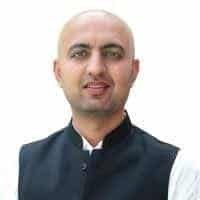
Prashant Chaudhary, an IIT Delhi alumnus, founded CodeYogi Foundation to bring technology education to students who have long lacked access to it. He has been working on this mission for the last 6 years, and has trained thousands of youth in deep technology skills, eventually enabling them to work at high paying tech roles in global startups.
You can reach out to him at hello@codeyogi.org or learn more about CodeYogi at www.codeyogi.org