Celebrating 250 years of Composer Muthusvami Dikshitar
October 21, 2025

For too long, composer Muthusvami Dikshitar has primarily been viewed through his music featured in Kacheris along with the music of two other composers of Karnatic Music Syama Sastri and Tyagaraja. While the Chennai music season celebrates his legacy with traditional audiences, my aim with Anubhuti is to celebrate the experience—the anubhuti—of Dikshitar himself. I want to introduce Dikshitar’s exceptional creative mind to a wider audience—anyone interested in history, India, and perhaps, a deeper understanding of cultural expression. I also hope to highlight India’s rich temple heritage, as it is so deeply interwoven into his creations.
Dikshitar (1775-1835) was a monumental figure, far more than just a composer. He was a traveler, a poet, and a cultural visionary. His Sanskrit compositions are a stunning blend of temple traditions, ancient philosophical thought, and pan-Indian traditions. Imagine a mind so vast that it drew from various intellectual streams, creating ‘musical stories’ that reflect profound Indian thought and ancient poetic forms, bridging regional and pan-Indian expressions.
In Anubhuti, I invite you to join me on a journey through his travels across India, mapping the geographic and spiritual inspirations behind his works. We’ll explore his rich cultural synthesis during colonial rule, a time when he dared to share his message even through the medium of colonial music. A fascinating example of his cultural adaptation, in my view, is his repurposing of the British National Anthem tune as a piece of praise for Devi in the paradigm of Advaita Vedanta or non-duality perhaps in one of the first ever expressions of ‘decoloniality’. This book narrates all of this and, I believe, offers a fresh perspective on Dikshitar that hasn’t been widely explored before. This very theme, the creative adaptation of colonial influences, was a central idea in my own award-winning film, ‘Colonial Interlude,’ creating a significant personal connection to Dikshitar’s work. (Trailer)
I see Dikshitar as a scholar, a profound thinker, a keen observer of his world, a relentless and fearless traveler, a compassionate mentor, and a tireless educator whose every composition is a masterclass in storytelling. He was a perfectionist, incredibly knowledgeable in various disciplines—a true polymath with a global outlook. His singular focus was on disseminating insights into Indian culture, its fascinating array of temples, and its rich traditions.
Anubhuti positions Dikshitar’s music within the broader context of Indian classical music and situates his life against the backdrop of the early colonial era. It showcases the incredible diversity and variety in his repertoire, highlighting unique intricacies and placing the narratives in his compositions within a pan-Indian context. We delve into the underlying philosophical themes and cultural traditions, even in his music based on colonial tunes, and explore his deep connection with various pan-Indian sites and traditions.

I draw clear parallels between different Indian philosophical movements and Dikshitar’s work and highlight his extensive travels in the context of historical and contemporary explorations. We discuss the personal and spiritual aspects of his life and the traditions he embraced, ultimately showcasing his role as an integrator and innovator par excellence.
This book is my humble tribute in the 250th year of his birth, an invitation for everyone to learn about this extraordinary figure. Anubhuti is rich in symbolism, much like his compositions, right from its cover. It highlights several cross-cultural connections and is a reflection of my own deep connection with the composer and the profound influence his music has had on my own creative endeavors, particularly evident in ‘Colonial Interlude.’
Dikshitar was a historian, a cultural commentator, an unconventional musician, a poet, and a champion of his civilization—all in one. His creations in Sanskrit, presented in a stunning range of melodies, represent an unspoken story: the story of India’s cultural heritage, a complex tapestry of pan-Indian ideas interwoven with local traditions, intriguing literary devices, ancient poetic structures, and deep Indian philosophy.
Published by Garuda Prakasan, New Delhi, Anubhuti is the first book on the composer released this year, and I hope it will ignite a new appreciation for his enduring legacy.
About the Author

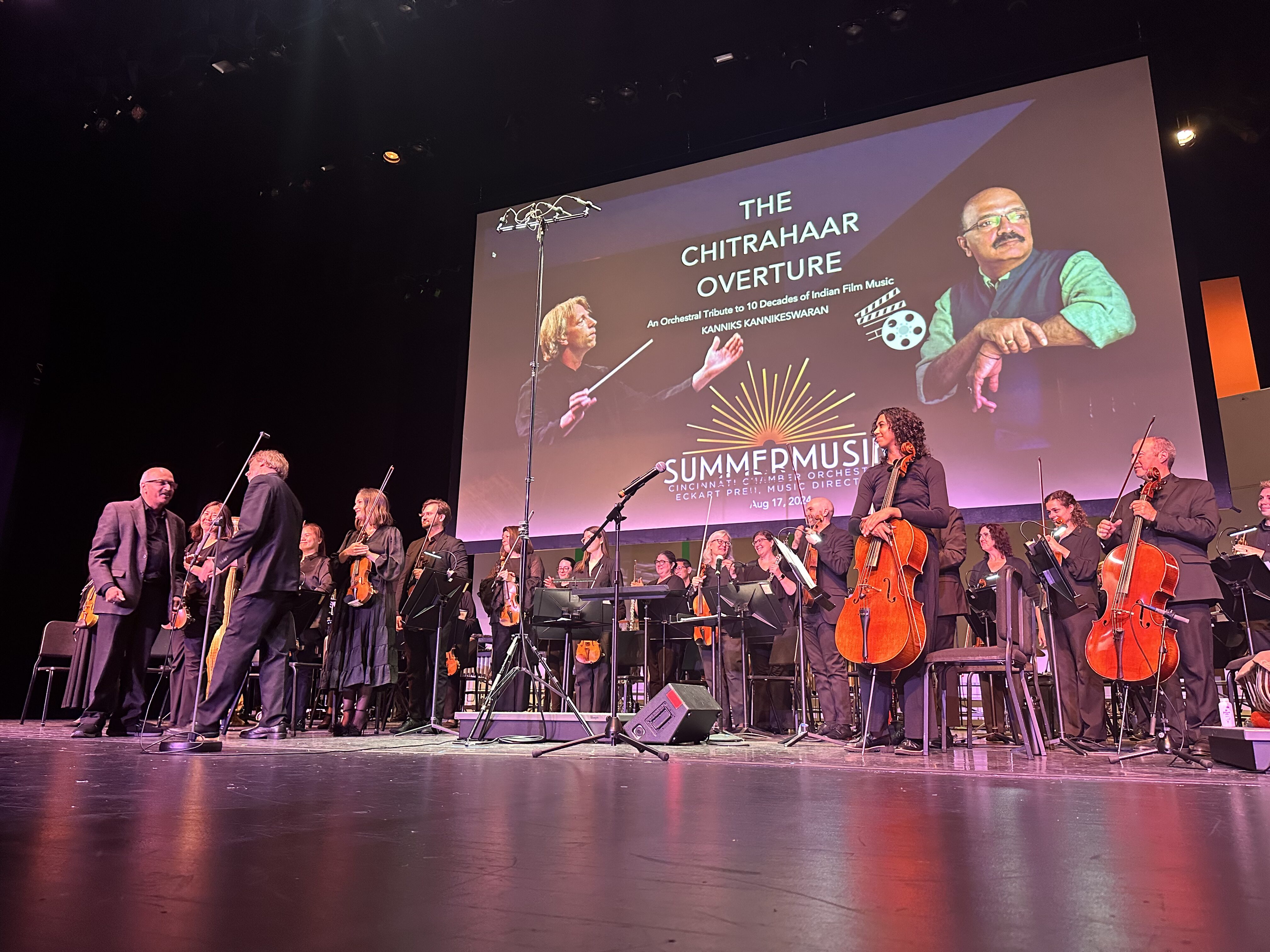
Dr. Kanniks Kannikeswaran is an internationally renowned music composer, educator, and scholar. He is celebrated for his sustained contributions to music and community over the past 25 years. His collaborations include prominent artists such as Bombay Jayashri, Kaushiki Chakraborty, and the Cincinnati Pops Orchestra. His trilogy of viral music videos on water resources composed and produced for the International Center for Clean Water, IIT Madras have had a wide-reaching impact. Kanniks is the recipient of numerous awards, including the Ohio Heritage Fellowship and the Distinguished Alumnus Award from IIT Madras. His film “Colonial Interlude” received the “Best Short Documentary Film” award at the Indian Film Festival Cincinnati 2023 and the ‘Best Documentary Film’ award at the Indian International Film Festival, Boston. Maestro John Morris Russell—Director of the Cincinnati Pops Orchestra—describes it as “…an extraordinary story that I knew nothing about. It has really changed my view about music making and the power of music to bring people together.” “Anubhuti” stands as Kannikeswaran’s humble tribute to Dikshitar, a reflection of a profound lifelong connection.
Copies of the book may be ordered here.