
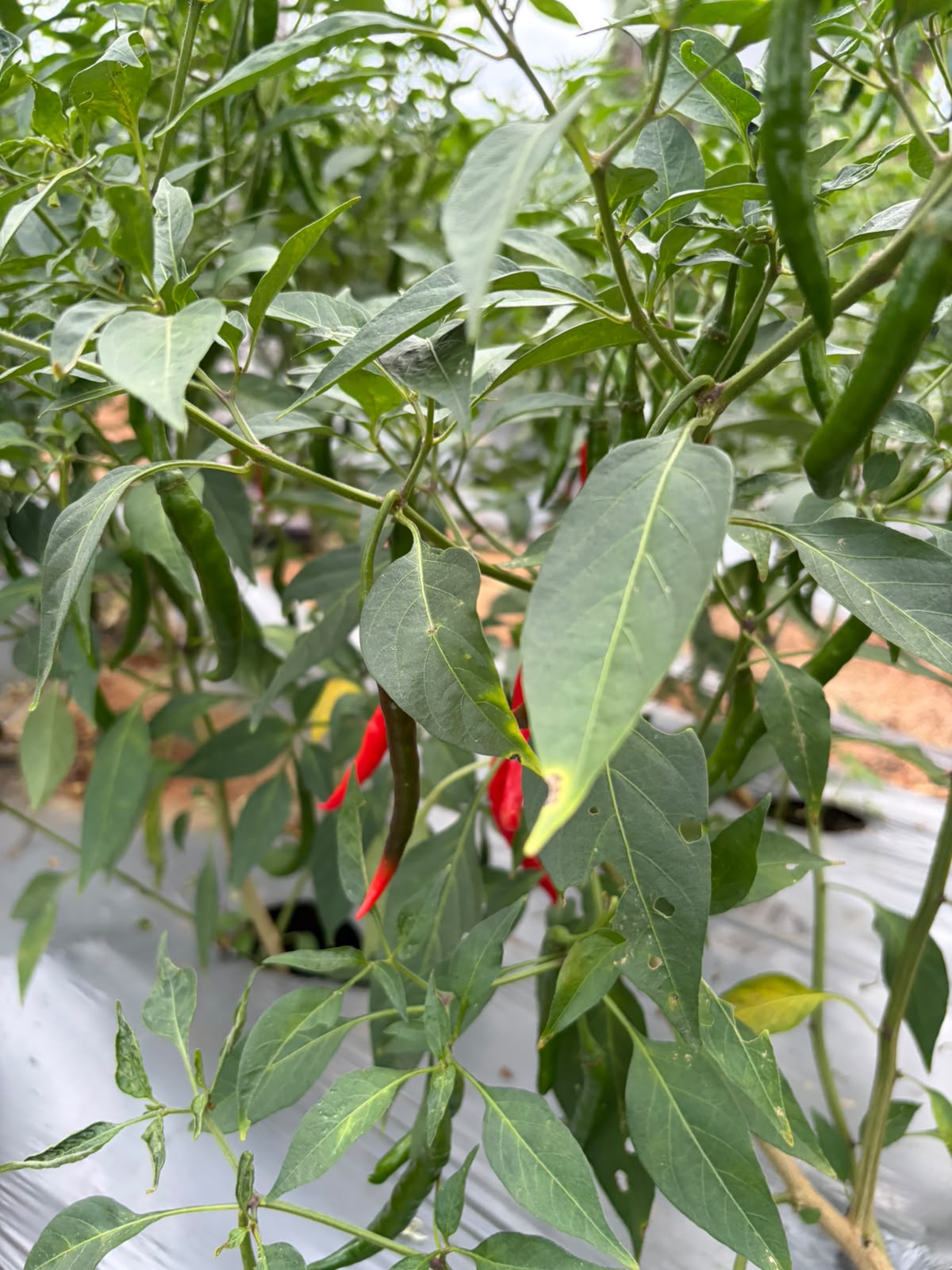
The Warangal region of Telangana is known for its chilies. There’s the Teja, which makes your eyes water. And there’s the Warangal Chapata, the fat, tomato-shaped one with a GI tag, which is more about color than fire. India supplies nearly half the world’s traded chili, and Telangana is the country’s number two producer (26% share).
Being a chili farmer is not a hot job. Most farmers have less than five acres; prices swing wildly – in 2025 prices crashed. At the market yard, traders quote low even for good produce. And output quality and quantity are affected by pests such as black thrips.
Yes, the weather must be hot too but there are nuances. Heavy late rains and too much heat early in the season now hit the crop more often. Then there are cyclones like Montha, which swept through in October 2025 and left chili plants wilting in waterlogged fields.
Enter cool-headed Krishnaiah Kodimela. He grew up in a farming family and spent 16 years in agriculture. Along with Narender Kande, he started Pasidi Panta – golden harvest in Telugu – in 2019 to solve issues in the spice value chain, starting with chili.
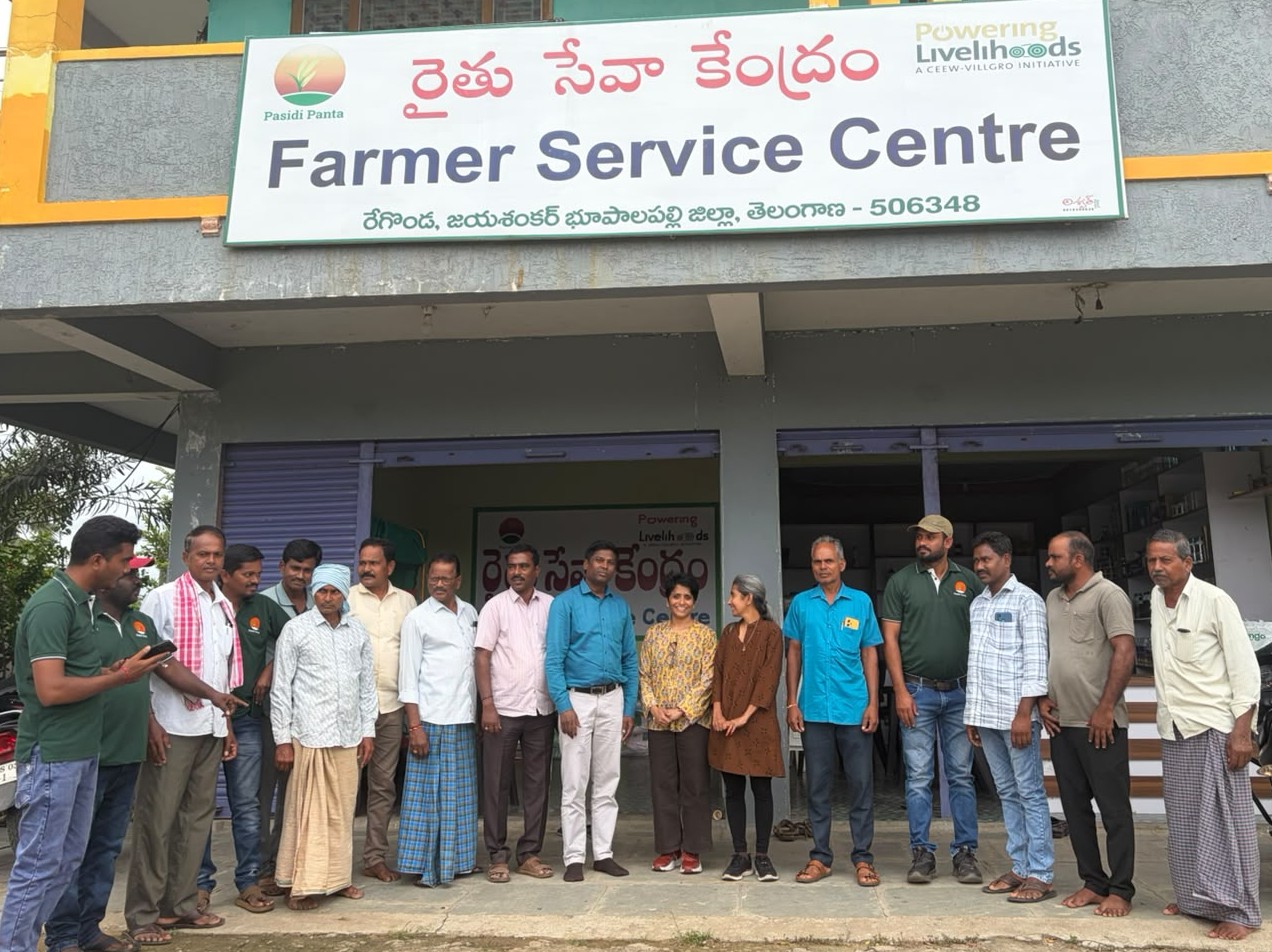
Pasidi Panta is a one-stop shop for the small chili farmer, from seed to sale. Farmers get training and one-on-one advice, plus good seed and inputs at fair prices. They also get help with Integrated Pest Management: the right nutrients and pest control at the right time, so the chili comes out residue-free and high quality. At harvest, Pasidi Panta buys directly at the farm gate, with transparent weighing and pricing, and helps with finance. It also runs a farmer service center that brings all of this under one roof (set up with support from Villgro).
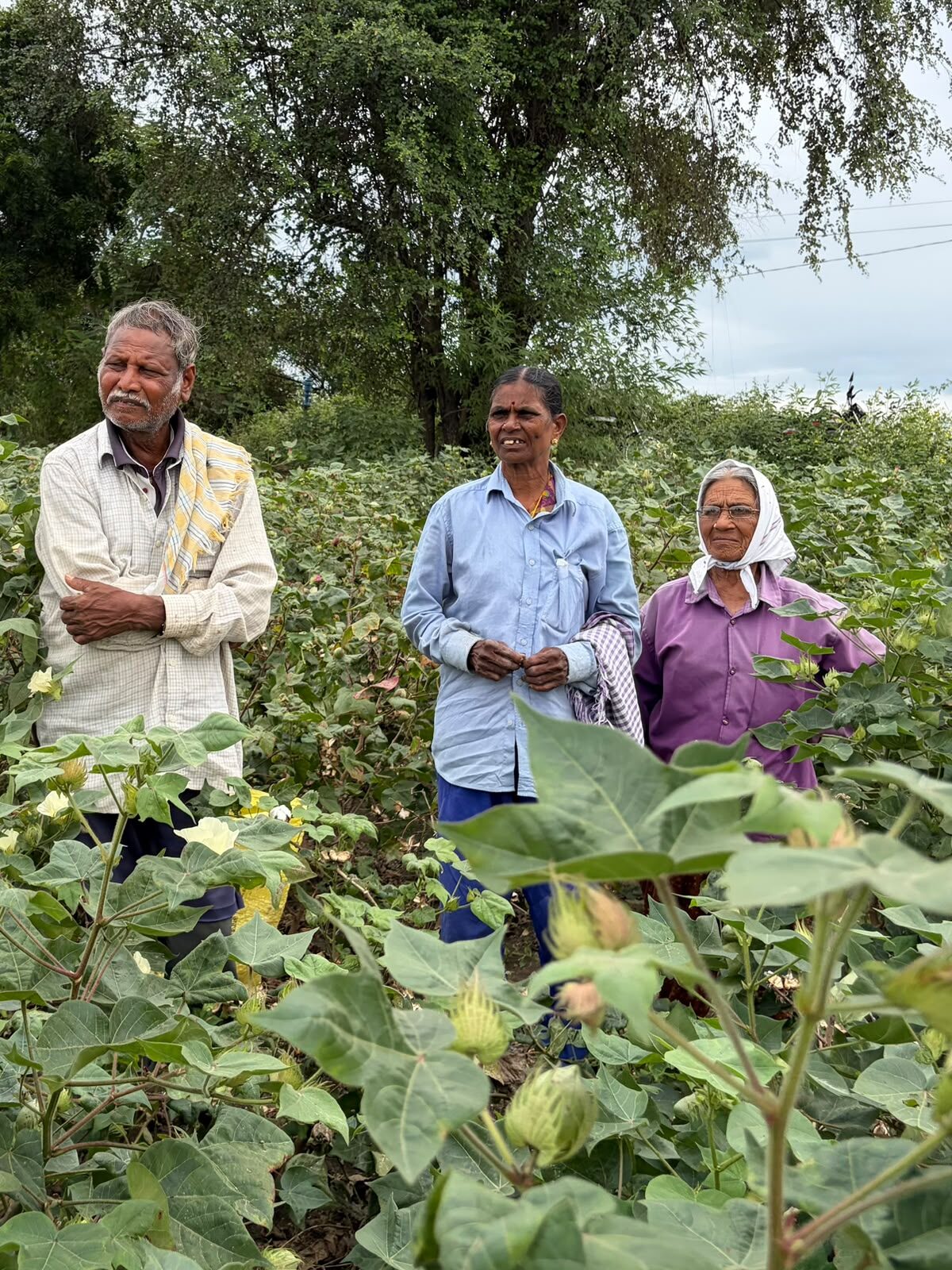
The result of this work is that farmers are not in the red, but in the green – the market link alone puts ₹1,500–2,000 more per quintal into farmers’ pockets. The farmers I spoke with during my visit in early November talked highly of the trusted handholding they get and its positive impact.
On the farm, the plants were brimming with small white flowers, green chili and a few red fruits. The harvest is by hand, requiring lots of labor. As the chili matures unevenly, farmers also pick the same plants several times. The team showed wilting leaves. I saw tiny black dots – thrips and the concerned looks of the farmer who could connect the dots to financial difficulty.
Pasidi Panta’s method treats the pests so that there is much less chemical residue in the harvest. In June 2026, China turned back shipments of Indian red chili over pesticide residue. Buyers are watching trace chemicals closely, so the market for clean, high-quality produce is growing, and farmers are keen to change to better methods.

What else is hot? There is an R&D farm, run by a local farmer, to try out new methods and seed varieties right in the village. The farmers discussed the issues with the current crop insurance and why changes such as in how damage is assessed will help them. Pasidi Panta’s sister nonprofit, the Pasidi Panta Foundation, chaired by Narender, creates farmer groups, helps farmers make their own bio-inputs, trains farmers, renovates village tanks and runs demo farms for pest management and natural farming. The Farmer Producer Organization (FPO) in the village we visited is easing work for farmers by procuring farm mechanization equipment.
Some like it hot. But I am the kind of person who cries when life gives me chilies. On the drive back, I ordered my ‘no spice’ pulao at a newly built eatery by the highway. The light drizzle that traveled with us had stopped and the sky had a burst of rainbow – with a wide band of hot red.
Written by Meera Siva, CEO Inkludo Impact Foundation.