
When people ask why I chose to build in cancer care, they often expect the answer to begin with artificial intelligence.
Instead, it begins with my mother.
In 2023, when my mother grappled with Stage IV gallbladder carcinoma, one of the most aggressive forms of cancer. Desperate for answers, I travelled from Delhi to a leading cancer hospital in Mumbai, hoping for a treatment plan that would give us hope.
Instead, after a consultation that lasted barely a few minutes, we were given a timeline of 3 months and told that we should spend whatever time we had left together.
At 26, I wasn’t ready to accept that a life could be reduced to a prognosis so quickly.
So I kept searching.
Over the following weeks, we travelled from one hospital to another, seeking second and third opinions. Every consultation began the same way: I had to reconstruct my mother’s medical history, explain previous treatments, answer questions from memory, and hope I hadn’t forgotten an important report. In moments of stress, even the smallest missing detail could feel overwhelming.
Then we met an oncologist who approached her case differently. He spent more than an hour reviewing every report, asking detailed questions, and understanding her complete treatment journey before recommending a plan. I spent the rest of the day collecting records from different hospitals so he could see the full picture.
Only after understanding her entire journey did he recommend a treatment that had previously been ruled out. The surgery was successful and gave our family two more precious years together.
That experience taught me something I have never forgotten: in cancer care, the quality of a decision depends on the quality of the information behind it.
Finding the Bigger Problem
As me and my co-founder Shubham travelled across India seeking multiple opinions for my mother, we realized our experience wasn’t unique. In hospital after hospital, we met families carrying thick folders of medical records, repeating their stories to every new doctor, and trying to make life-changing decisions while navigating an already overwhelming healthcare system.
We realized that the problem wasn’t a lack of medical expertise, India has exceptional clinicians. The challenge was ensuring they could quickly understand a patient’s complete treatment journey.
Over the past few years, through BigOHealth, we have helped more than 80,000 patients from underserved and rural communities across India access primary care. Yet my mother’s cancer journey revealed a very different challenge. That led us to ask a simple question:
How can technology make cancer care easier to navigate for every family?

Building OncoVault
That question became the foundation of OncoVault.
OncoVault is an AI-powered cancer intelligence platform that transforms years of scattered medical reports, treatments, scans, and pathology into a chronological treatment timeline for patients. Within minutes, it converts these hundreds of pages of reports into a 60-second clinician-ready summary, helping doctors quickly understand a patient’s history and focus on making informed treatment decisions.
One of the most meaningful parts of this journey has been working with Dr. Nitesh Rohatgi, Medical Oncologist, and Dr. Swarupa Mitra, Radiation Oncologist, the very doctors who once treated my mother. Today, they are helping us build the solution that grew out of that experience. Their clinical expertise has been instrumental in shaping every aspect of OncoVault, from how AI interprets complex medical records to how treatment timelines and clinician summaries are generated, ensuring the platform reflects real-world oncology workflows rather than assumptions made by engineers.
From Hospital Corridors to the U.S. Department of State
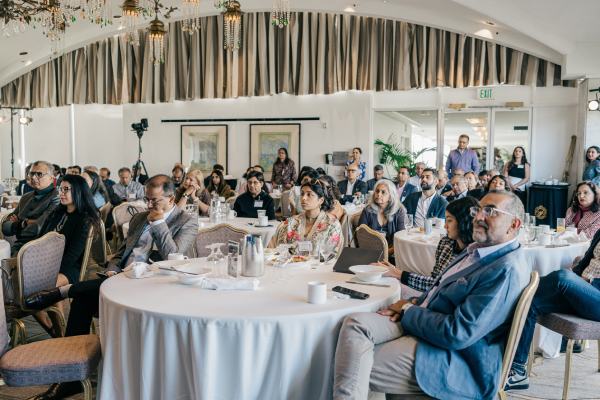
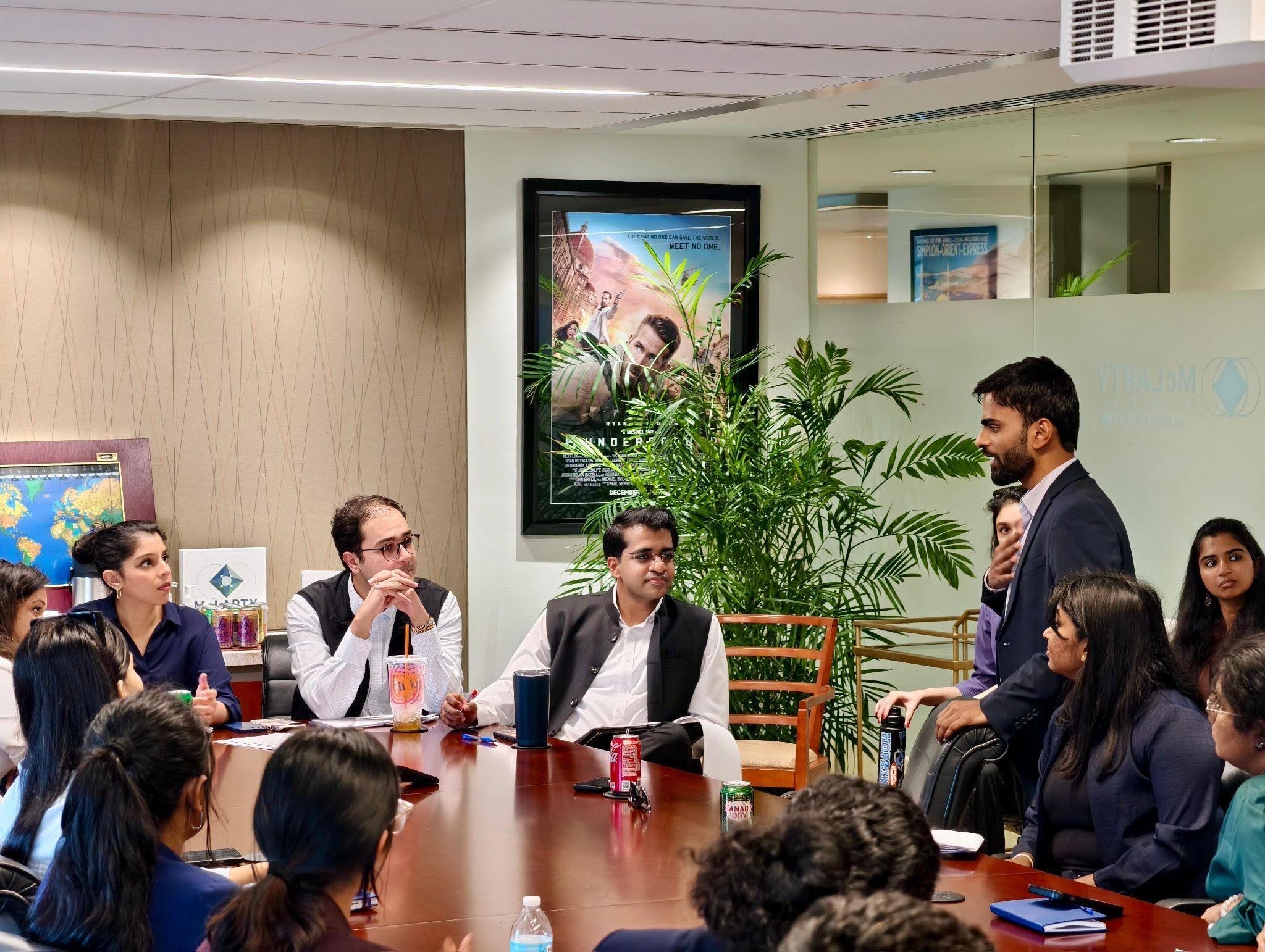
This June, I had the privilege of representing India in the Young South Asian Leaders Initiative (YSALI), a leadership program of the U.S. Department of State.
As I travelled through Nebraska and Washington, D.C., I expected healthcare challenges to look very different from those in India. Instead, I found a common reality: Whether in India or the United States, patients often struggle to navigate complex healthcare systems, coordinate care across multiple providers, and make informed decisions during some of the most difficult moments of their lives.
The experience reaffirmed my belief that meaningful innovation begins with real human problems. For us, artificial intelligence is not the goal, it is the tool that helps doctors make better decisions and enables patients to navigate cancer care with greater confidence.