How a fallen kite led to a bird hospital and an Oscar-nominated film
If you grew up in Delhi, you know the sky I mean. In January’s cold or June’s heat,
paper kites rise from rooftops. Above them circle the other kites: Black Kites, birds of
prey that have shared Delhi’s skies with us for generations.
My brother Mohammad Saud and I grew up in Old Delhi watching both. As boys, we
found an injured Black Kite in the street and carried it to a charity bird hospital. They
would not accept it: they treated only birds that did not eat meat. We had nowhere else
to take it, so we left it where we found it. We never forgot.
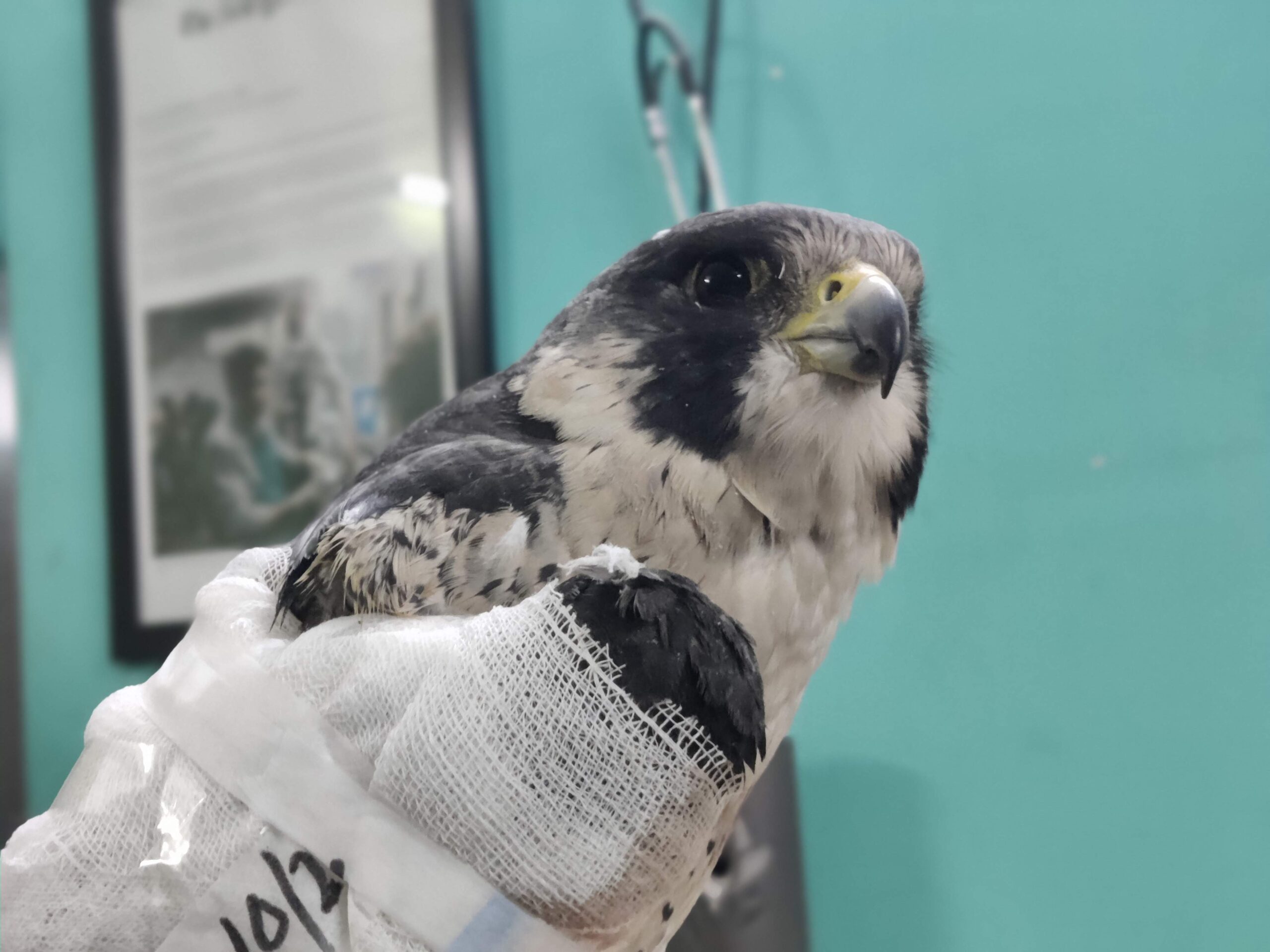
For years we saw injured kites by roadsides, sometimes lying there for days until they
died of thirst and hunger. In 2003, we could no longer walk past. We picked one up and
brought it home.
We did not know it then, but we had found the work of our lives.
A clinic in a basement
We learned by doing, alongside a veterinarian. We cleaned wounds, set wings, made mistakes and tried again, all of this in our bedroom. More birds kept arriving because there was nowhere else for them to go. In 2010, we registered Wildlife Rescue as a charitable trust and began keeping a numbered record of every bird.
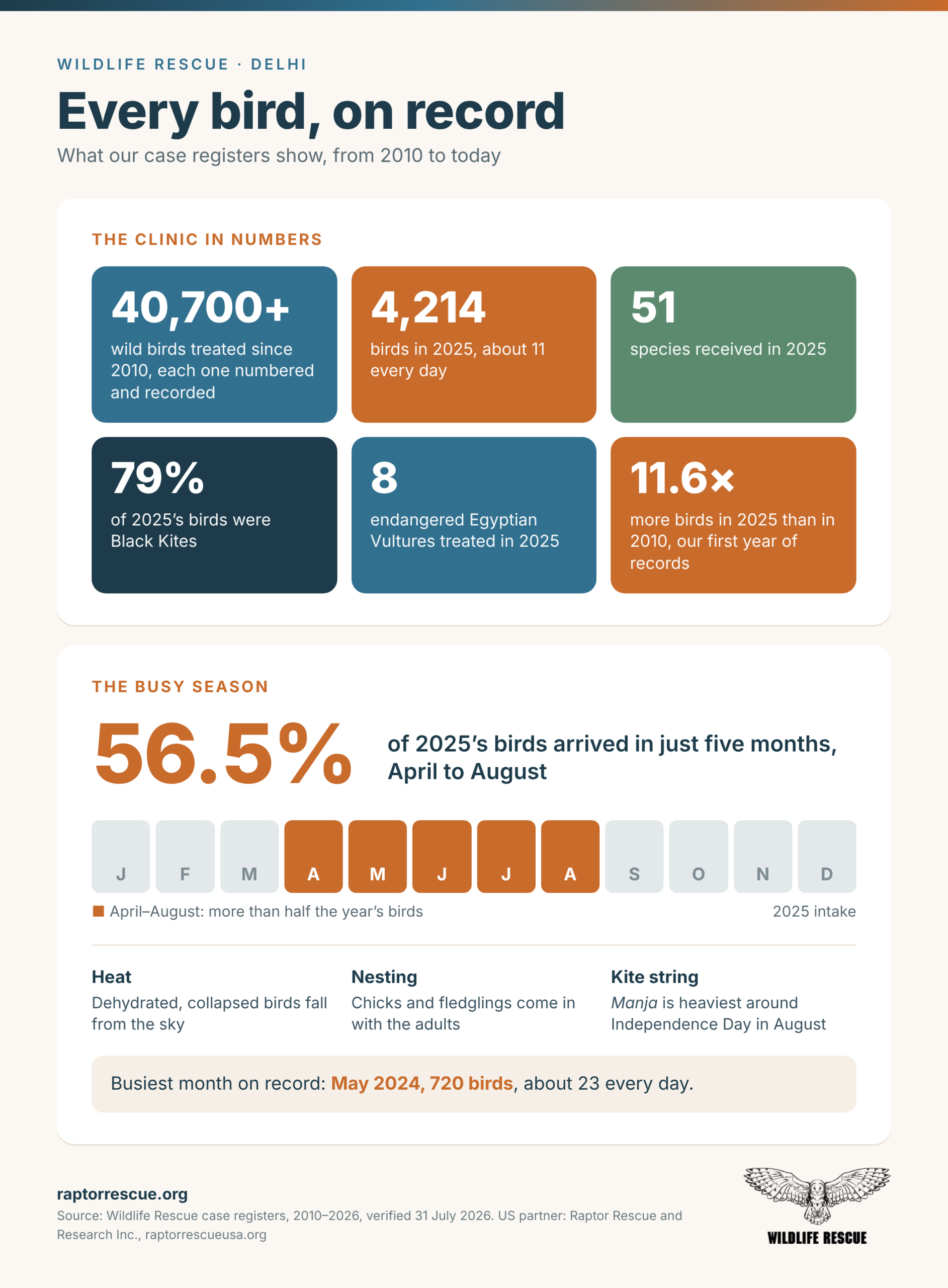
Today that record exceeds 41,000 wild birds. Our eleven-person team works at a clinic in Wazirabad, north Delhi, where we moved in 2013. In 2025 alone, we received 4,214 birds from 51 species, our busiest year yet. Most were Black Kites. We also treated eight endangered Egyptian Vultures.
In May 2024 alone, 720 birds arrived. Behind each number is a bird someone stopped
to help.
The thread that cuts
Most of the kites we treat are not sick. They are cut. Kite-flying is one of Delhi’s great
childhood joys, but strings coated with powdered glass, designed to cut competing kites loose, also slice through birds’ wings in flight. A bird strikes the thread at speed and falls.
I do not say this to blame anyone. We flew kites as children too. But the joy above our
rooftops and the birds on our operating table are connected by a single thread.
Black Kites also serve Delhi’s urban ecosystem. By scavenging animal remains and
organic waste, they help recycle what the city leaves behind. Saving them means
protecting more than individual birds; it means caring for the living system we share.
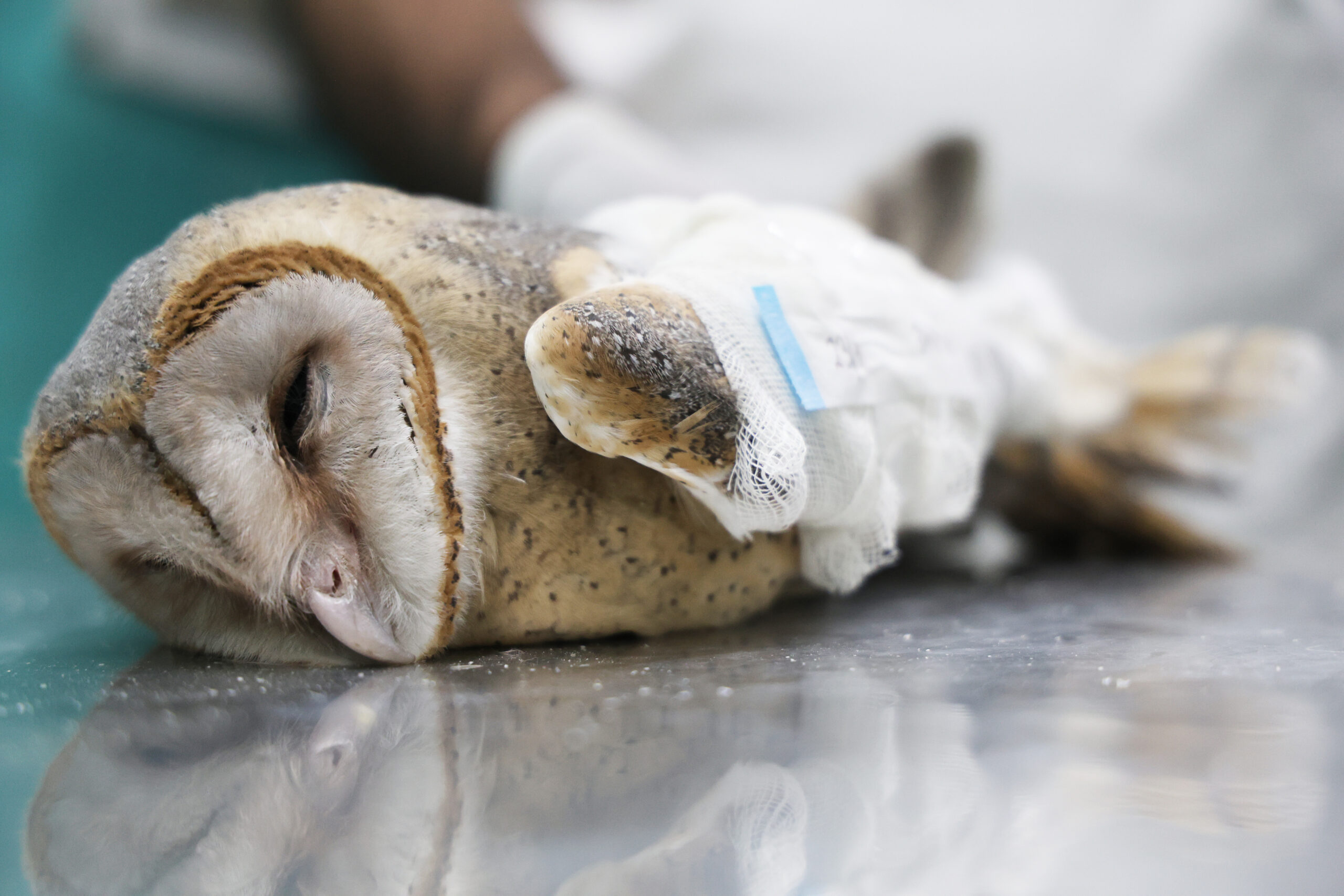
Over the years, my brother, our team and I have developed techniques to repair severe
wing injuries, giving some birds that might otherwise never fly again another chance to
return to the sky.
At the recent Indiaspora Summit, we connected with the message about contributing to both our Matra Bhumi, our motherland, and our Karma Bhumi, the land where we live and contribute. Our work began in India, but we have shared what we learned with wildlife rehabilitators in the United States.
Good ideas about healing birds should not stop at borders.
A film about breathing
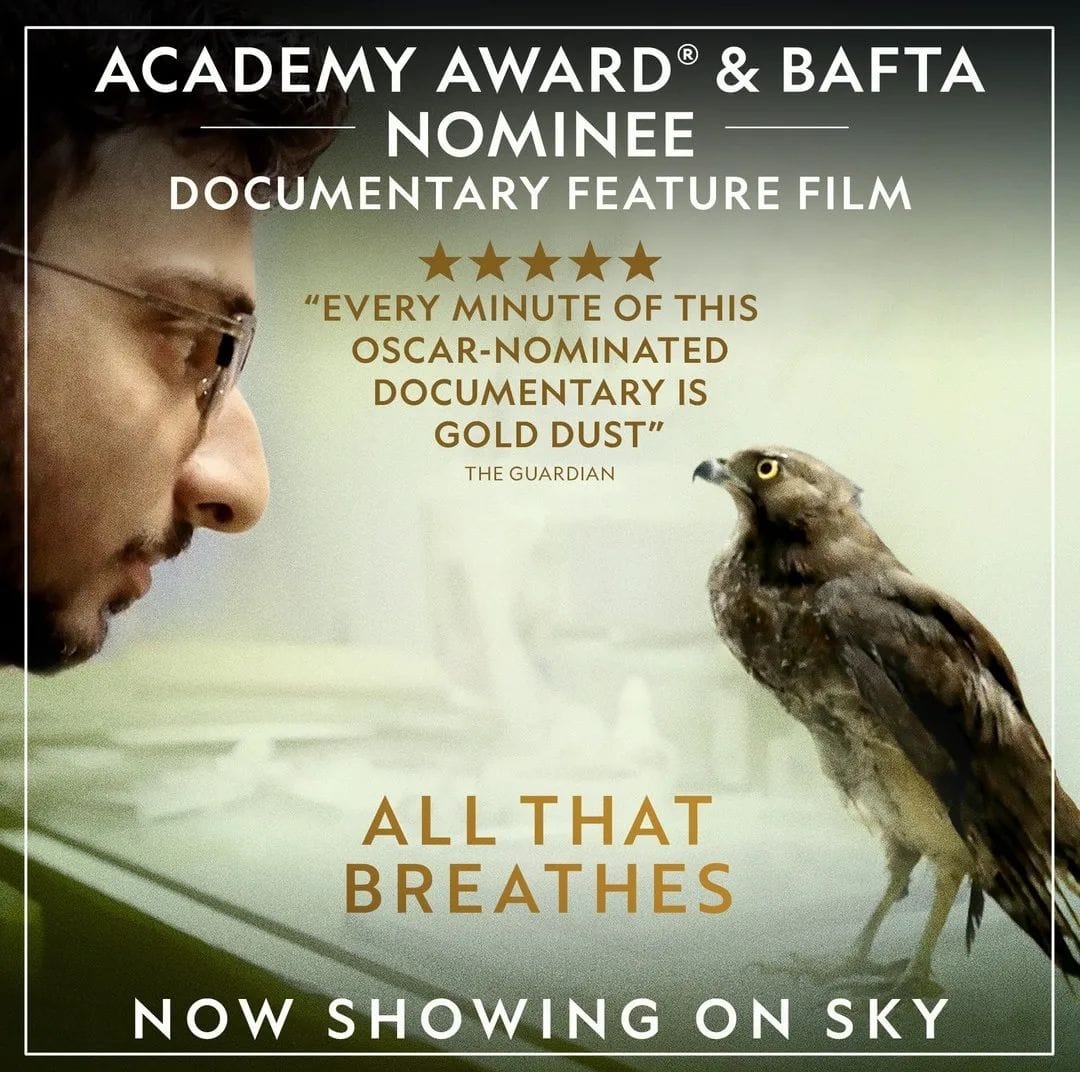
In 2022, Shaunak Sen’s documentary about our work, All That Breathes, premiered at
Sundance, winning the World Cinema Grand Jury Prize for documentary. It later won
the Golden Eye at Cannes and received an Academy Award nomination for Best
Documentary Feature.
People sometimes expect a nature film. It is also a film about Delhi: its air, crowds,
noise, and the birds living among us. Black Kites thrive here because the city feeds
them. In that sense, they are as much Delhiwallas as we are. The film asks a simple
question: if we share the air, what do we owe each other?
We have screened the film in Oregon, Idaho, New York, Geneva and London, usually
followed by long conversations. Audiences ask about the birds, the city, and my brother
and me. People who grew up in India bring personal memories of rooftops, kites, and
the sounds of a city that stays with them.
Why I am writing to the diaspora
The Indian diaspora carries Delhi’s sky with it. Some of you left decades ago; others
return every winter. You may recognize a world that is hard to explain to someone who
has never stood on a Delhi rooftop during kite-flying season.
That is why I would love to bring this film to you. A screening is more than a chance to
watch a documentary. It is an evening to reconnect with the city we remember, share
stories, and talk about the wildlife that shares our lives. Perhaps it is also a chance to
consider what we can give back to the places that shaped us, wherever we live today.
Since 2003, tens of thousands of birds have come through our doors. Most were
brought by someone who could not walk past a fallen bird. I like to think many of you
would have done the same.
Host a screening this season
From mid-November through December 2026, I will be in the United States to screen All
That Breathes with communities, chapters, families and friends. The evening is free. We
bring the film and the conversation; you bring a room and the people you would like to
share it with. A living room for twenty works as well as a hall for two hundred.
To host, email nadeem@raptorrescue.org. Learn more about the clinic at
raptorrescue.org and our U.S. partner, Raptor Rescue and Research Inc., at
raptorrescueusa.org.
Watch the trailer here
Author bio
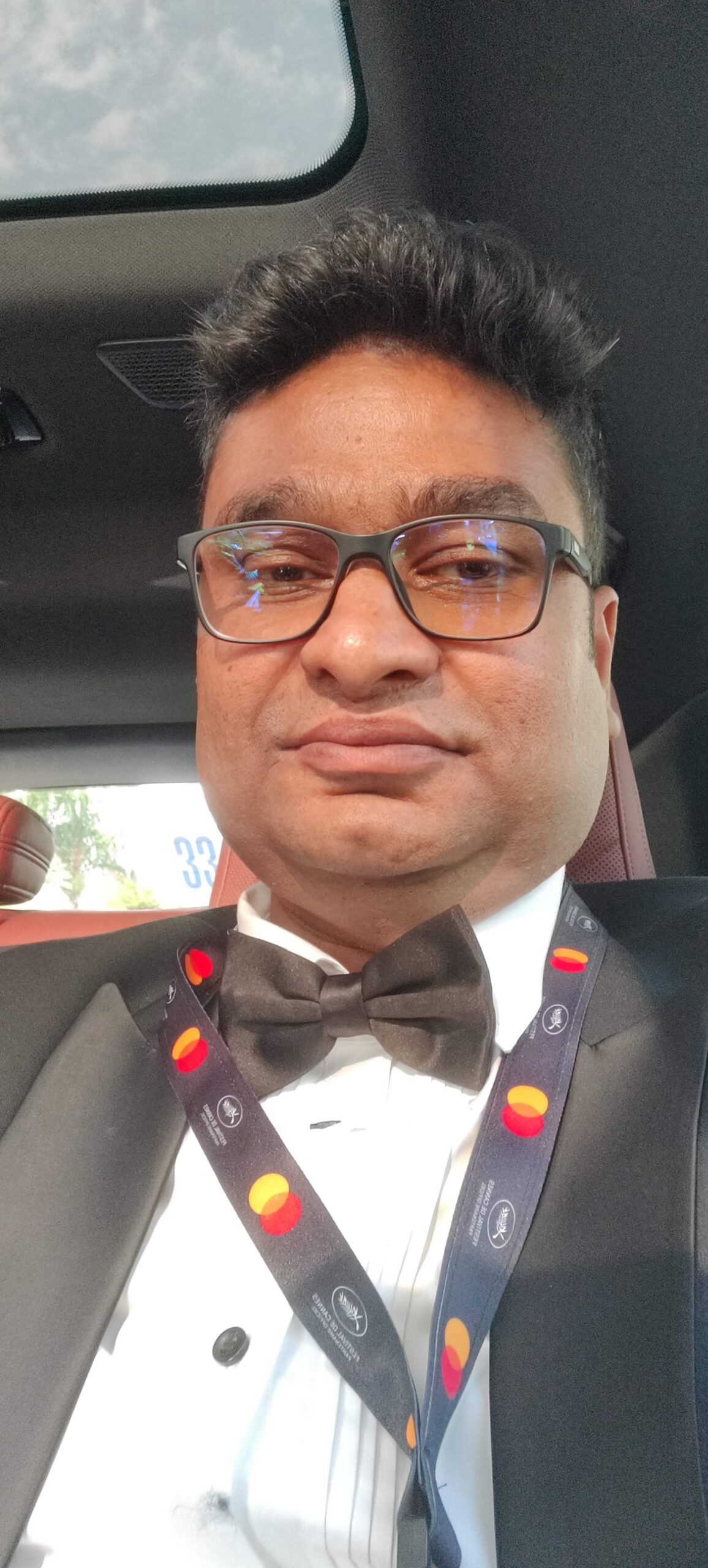
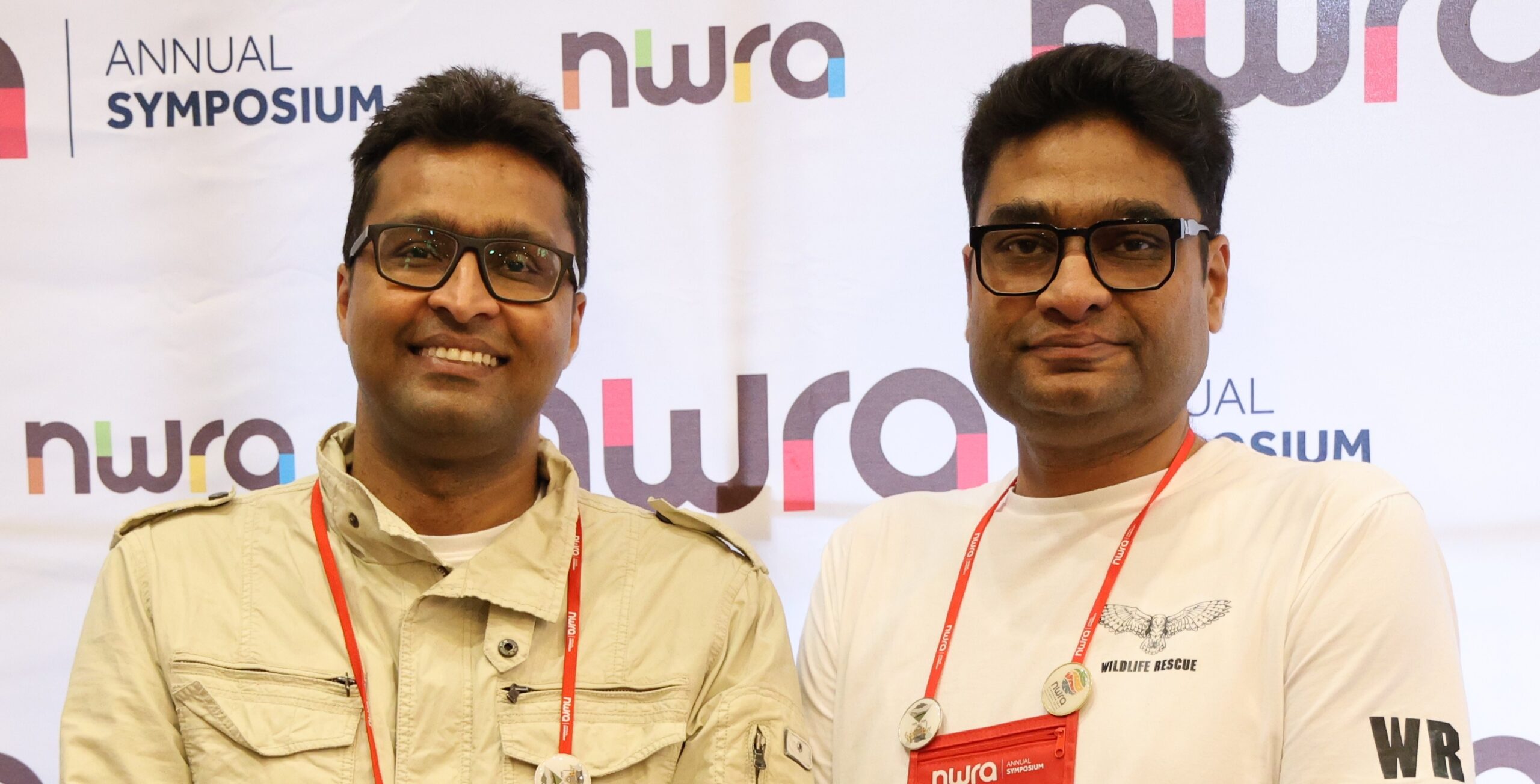
Nadeem Shehzad and his brother Mohammad Saud have rescued injured birds of prey in Delhi since 2003. Their Wildlife Rescue clinic has treated more than 41,000 wild birds since 2010.
Their work is the subject of the Oscar-nominated documentary All That Breathes. Nadeem is Secretary of Raptor Rescue and Research Inc., Wildlife Rescue’s
U.S. partner.