
I have always believed that the Divine is larger than any one form. I pray to different Gods, find meaning in different traditions, and have never felt the need to choose one over another. But being from Odisha, I have always felt Lord Jagannath’s presence throughout my life. Like many Odias, I grew up feeling close to him without ever questioning why.
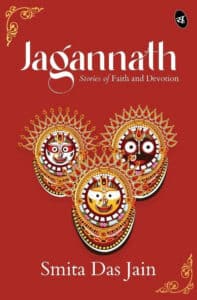
When I started writing Jagannath: Stories of Faith and Devotion, I was under the impression that I knew the deity I pray to daily. And soon realised how little of that was true and how much of Him I still had to discover. I found myself humbled by the vastness of a world that had quietly existed around me all along.
Somewhere during that journey, the book stopped being a writing project and brought me closer to my roots and culture.
What We Carry Across Distance
What do we really carry with us when we leave home? The question kept coming to my mind while writing the book, perhaps because I have never had a simple answer to what “home” means.
My father served in the Indian Army, and our family moved across the country every few years. Although Odisha was always home in an emotional sense, I was neither born nor brought up there. We spoke Odia at home, but I never read or wrote in the language. By the time my parents returned to Bhubaneswar after my father’s retirement, I was already in college and soon began building my own life in the Delhi-NCR region.
Today, nearly two decades later, I still find myself wondering where home truly is. Is it Bhubaneswar, where my parents live? Is it Hardoi, where my in-laws are settled? Or in Gurugram, where I have built my own life and family?
For millions of Indians living across the world, home is no longer only a place. It is something reconstructed through festivals, family recipes, languages spoken at the dinner table, photographs on the wall, and traditions that somehow survive across generations.
That is why writing this book felt relevant for Indians around the globe, especially the Diaspora.
What the Book Holds…and What Surprised Me
As I went through scriptures, temple history, folklore, tribal traditions, and oral narratives, the book eventually took shape as a collection of 75 stories, unfolding across six interconnected parts:
Origins and Legends: The journey begins with the origins of Jagannath, tracing the path from Nila Madhava to the Lord of Puri through mythology, history, and enduring legend.
The Shrine and Symbols: A closer look at Jagannath’s distinctive form, the symbolism behind the Puri temple, its rituals and architecture, and the traditions that continue to shape worship today.
The Siblings and Divine Family: Stories of Jagannath, Balabhadra, and Subhadra that reveal sibling bonds, love, compassion, and the humanity that devotees have cherished for centuries.
Miraculous and Spiritual Experiences: Narratives of kings, saints, poets, and ordinary devotees whose lives were transformed by faith, surrender, and divine grace.
Folk Tales and Tribal Stories: The lesser-known world of Jagannath’s tribal roots, hidden sanctuaries, folk tales, and oral traditions that preserve some of the Lord’s oldest memories.
Rath Yatra and Other Rituals: The rituals, festivals, symbolism, and enduring traditions that carry Jagannath’s presence far beyond the temple walls, from the streets of Puri to celebrations across the world.
As I wrote, the picture of Jagannath that emerged through these narratives surprised me.
I was fascinated by how a deity worshipped by kings also remained deeply connected to forest communities whose relationship with the Divine was intimate, simple, and rooted in nature. Then there was Anasara, the period each year when Jagannath is believed to fall ill after the Snana Yatra. There is something profoundly moving about a tradition that allows the Divine to rest, recover, and be cared for.
Before beginning the book, I knew him primarily as the Lord of Puri. After writing it, I saw him as the God of forests, of ordinary homes, and of people who sought him in remarkably different ways.
The awareness did not make Jagannath seem less divine to me. It made him feel closer.
The book became less of a chronological history and more of an invitation into a sacred tradition.
A Festival that Travels the World
The Festival Beyond India is one story from the book that I find especially relevant for the Diaspora.
In the story, I describe a Rath Yatra procession in London and explore how, for a few hours, the familiar cityscape, with its stone lions of Trafalgar Square, was transformed by marigold garlands, devotional songs, and the sight of chariots carrying a tradition that began thousands of miles away.
Distance changes landscapes. It does not change longing.
As I wrote in the book:
“When faith is shared with love, even the busiest street leads to the Divine.”
Rath Yatra is celebrated in cities across the world today as a reminder that faith and belonging can transcend geographies and generations.
Why Stories Matter to the Diaspora
Preserving culture is not only about celebrating festivals or recreating traditions. It is also about preserving the stories that give those traditions their soul. Stories help us remember not just where we come from, but who we are.
A festival can travel across continents. So can a ritual. But stories are what help them remain alive.
Children growing up outside India may remember the colours of a festival before they understand its meaning. They may recognise the music long before they know the stories behind it.
Those stories become bridges. They carry values without instruction, explain why something matters, and give emotion to memory. They help the next generation not only inherit customs but also appreciate context and feel a sense of belonging to their origins.
Belonging is never only about where we live. It is also about what we continue to hold close, what we pass on, and what still calls us inward across time and distance.
Writing this book reminded me that stories are often the deepest carriers of belonging. Through stories of Lord Jagannath, I discovered a tradition built on inclusivity and the reassurance that culture and heritage can accompany people wherever life takes them. I felt more connected to Odisha, the state where I originate from, than I ever had in my life.
Jagannath: Stories of Faith and Devotion (Srishti Publishers and Distributors, 2026) is my invitation to you to step beyond the Rath Yatra and explore a rich tradition that continues to connect people across generations, geographies, and hearts. It is available in India in paperback and globally on Kindle. You can find it on Amazon.