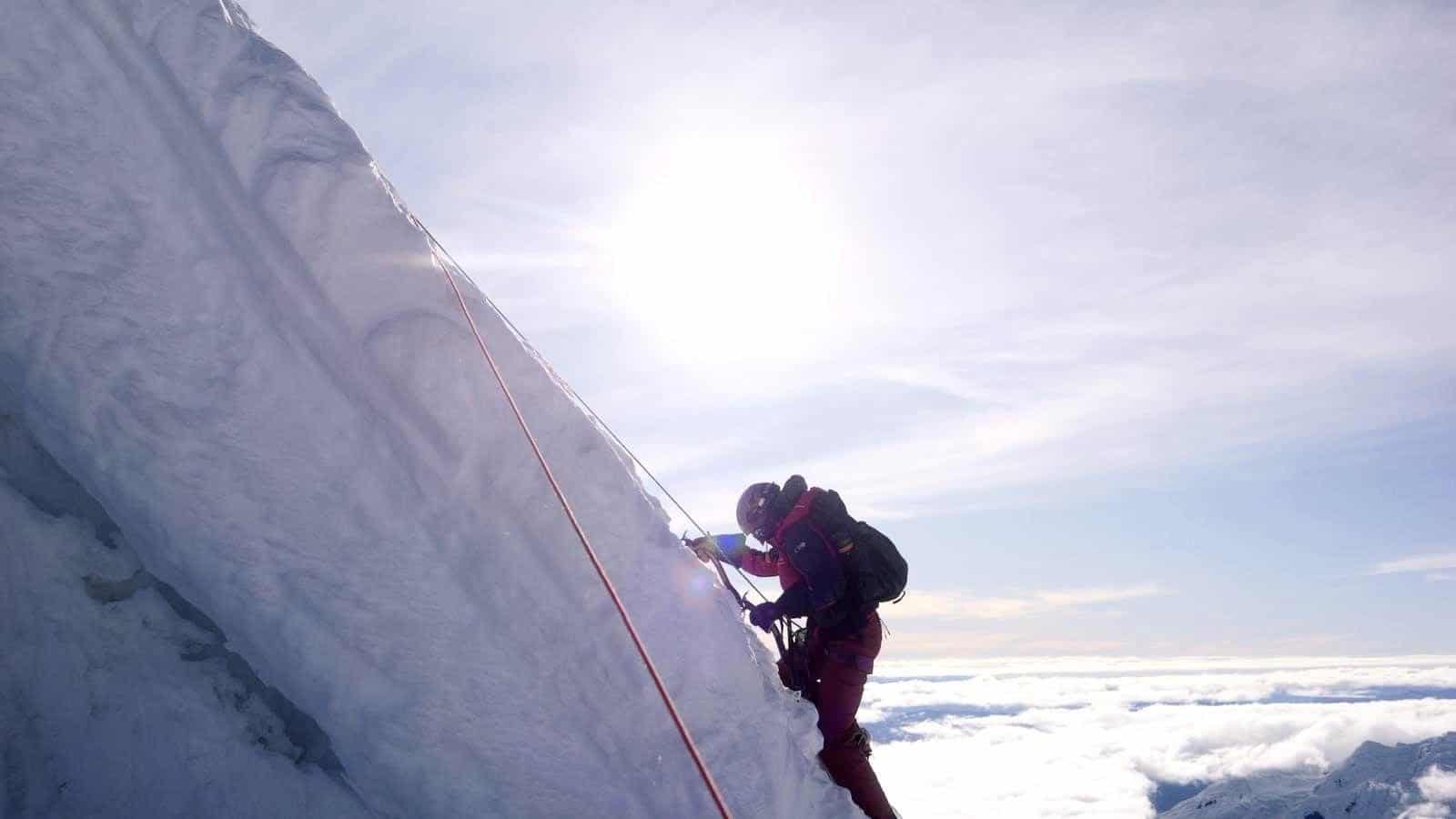

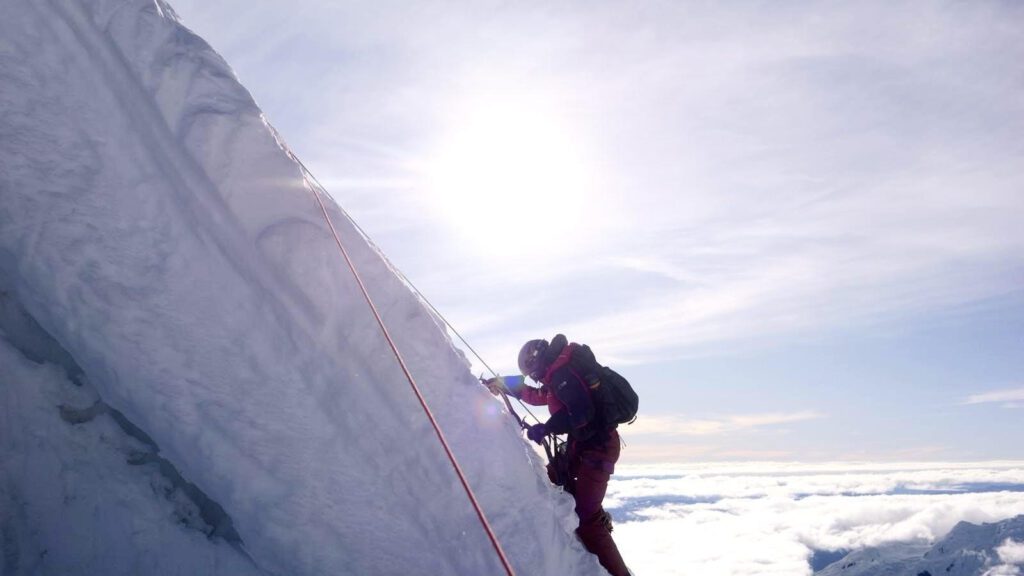
At 19,000 feet on Aconcagua, the highest mountain outside the Himalayas, I realized something simple and terrifying: I could not do this alone.
Frostbite had crept into my fingers, slowly at first, then all at once as my fingers went completely numb. I had two choices. Hide my pain and risk permanent damage, or tell my team the truth and trust them to help keep me safe.
I chose the second. My teammates wrapped my hands in warm gloves, gave me techniques to get the blood flowing back into my fingers, and together, we got to the summit.
That moment didn’t just change how I climb mountains. It changed how I understand survival.
For much of my life, I had been taught that strength meant silence. That survival meant endurance. That asking for help was a weakness. These messages might be deeply familiar in many South Asian communities, where individual resilience is often valued over vulnerability, especially for women and gender-marginalized people.
I can figure this out on my own.
But for me, silence was not strength. And endurance without support left me a mess.
The Violence We Don’t Talk About
Gender-based violence (GBV) is pervasive across communities, but it remains particularly under-acknowledged in South Asian spaces.
Research and community-based organizations working with South Asian survivors estimate that as many as 1 in 2 South Asians—nearly 50%—have experienced some form of gender-based violence in their lifetime, including domestic violence, sexual assault, emotional abuse, or coercive control. 85% of South Asians between 18 and 34 in the New York area have experienced sexual assault.
This is a public health crisis. But no one is talking about it.
Studies focused on South Asian women in the United States and globally consistently show disproportionately high rates of intimate partner violence, often compounded by immigration status, financial dependence, language barriers, stigma, and fear of ostracization. Yet reporting rates remain low. Many survivors never seek formal support, not because help isn’t needed, but because the cost of speaking out feels too high.
I know this silence intimately. I am both a survivor of gender-based violence and a South Asian woman. I carried my trauma alone while building a successful career, checking all the boxes that signal “strength” from the outside.
Inside, I was breaking.
Why I Started Climbing Mountains
Mountains have been my way back to myself.
Survivors to Summits was born from a belief that healing and justice require collective engagement. The initiative brings survivor stories to the highest mountains on every continent, to make what is often hidden impossible to ignore.
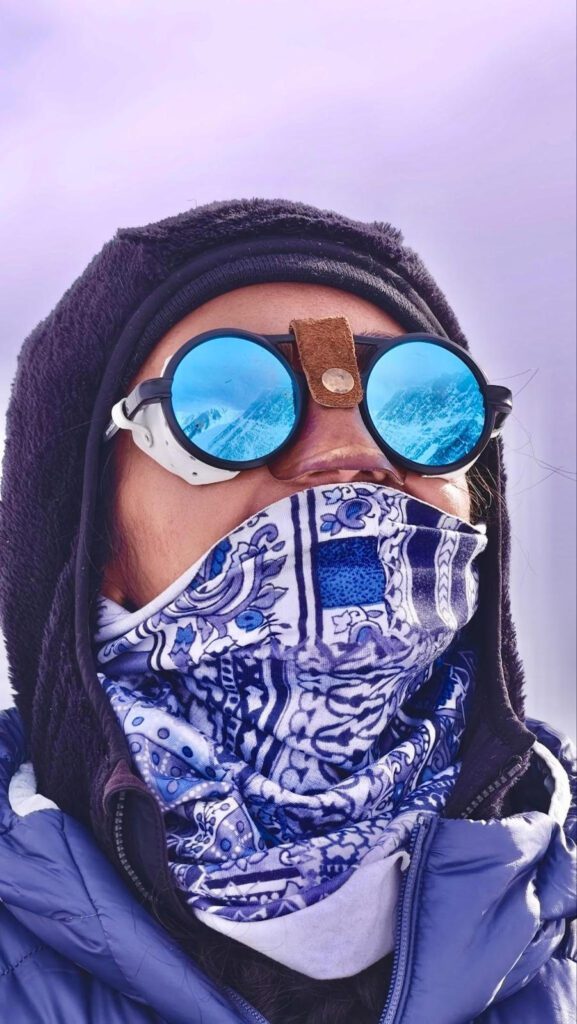
Each summit climb is tied to a specific campaign addressing the root conditions that allow survivors to step into their power: vulnerability, safety, accountability, healing, community, action, and power. Mountains become a platform, and a way to start conversations that are often avoided, including within South Asian families and diaspora spaces.
Climbing has taught me that the most dangerous moments are not when conditions are harsh, but when people feel they must suffer in silence. The same is true off the mountain.
What the Power of We Really Means
After four years in big law, I founded What is the Power of We, a movement and growing global coalition centered on a simple but radical idea: transformation happens through collective care and shared responsibility.
We reject the myth that survivors must heal alone or that communities are powerless to intervene. We ask different questions:
- What if safety were a collective responsibility?
- What if believing survivors was the norm, not the exception?
- What if our cultural values of community, care, and responsibility were mobilized to protect rather than silence?
In South Asian communities, we already understand interdependence. We raise children together. We celebrate together. We grieve together. Yet when it comes to gender-based violence, that same collectivism often turns inward, protecting reputations instead of people.
Reclaiming the Power of We means re-aligning our values with our humanity.
From Silence to Collective Action
Survivors to Summits is not about mountains, it is about movement. It is about creating space for survivor stories, funding grassroots organizations doing culturally competent work, and building a global hub where survivors, advocates, and communities can access resources without fear or shame.
For South Asian survivors especially, representation matters. Seeing our stories reflected—spoken in familiar languages, held with cultural nuance—can be the difference between isolation and connection.
We do not need to abandon our culture to confront violence within it. We need to love it enough to demand better.
An Invitation
If there is one thing the mountains have taught me, it is this: no one reaches the summit alone.
Not in climbing.
Not in healing.
Not in dismantling systems of violence that have thrived in silence for too long.
The Power of We is an invitation to listen, to believe, to intervene, and to build communities where survival is not an individual burden but a shared commitment.
Because when survivors are supported, entire communities rise.
Learn more:
- Survivors to Summits: https://whatisthepowerofwe.com/about-survivors-to-summits
- What is the Power of We: https://whatisthepowerofwe.com/