

I was just 21 years old when my life changed forever.
It was a quiet day in Andhra Pradesh, South India, where I had grown up. My family and I were traveling through a familiar road when we were ambushed by a local land mafia—men emboldened by caste privilege, impunity, and corruption. They blocked our path and hurled petrol bombs at our car. In seconds, the vehicle was engulfed in flames. My mother was killed.
There are no words for what I felt at that moment. Shock, grief, anger—all of them collided in me at once. But what stayed with me most wasn’t just the fire that destroyed our car and my mother’s life—it was the silence that followed. The silence of our justice system. The silence of a society that turns its back on families like mine. The silence of caste-based oppression so deeply rooted it becomes invisible to those not crushed under its weight.
I was devastated. I wanted revenge. I wanted someone—anyone—to pay. But it was my father who spoke the words that would change everything. His voice was calm, resolute, almost as if he had been preparing his whole life for this moment.
“Revenge will only criminalize you and all of us with you. If you want things to change, dedicate your life to justice. Defend the vulnerable.”
Those words became my compass.
Today, nearly five decades later, those are still the most important words of my life.
After my mother’s death, I could have let grief swallow me. I could have disappeared into rage or despair. But I chose to listen to my father. I refused to let our tragedy be reduced to another statistic. I wanted to understand why these things happen. Why do some lives seem to matter less? Why do entire communities—like mine—live under the weight of discrimination, violence, and exclusion?
I became a human rights defender, working for Dalit rights and focusing on the people most excluded by India’s caste system: the landless, the voiceless, the forgotten.
In those early years, I thought the law would fix what was broken. I believed that once justice was understood, it could be delivered. But I quickly learned that the law is only one tool—and often one that sits quietly in the hands of those with power. For Dalits and other marginalized communities, justice has never been given. We’ve always had to fight for it.
So I stepped outside the courtroom and into villages, slums, and urban ghettos. I worked alongside Dalit women fighting sexual violence, youth denied access to education, laborers trapped in bonded labor. I met survivors in Nepal, Sri Lanka, and Bangladesh whose lives mirrored our own in India. Slowly, I began to see a pattern.
This wasn’t just about caste. It wasn’t just about South Asia. Around the world, people were trapped in systems of social hierarchy and exclusion based on descent—where your birth decides your worth.
In 2001, I led a delegation of 200 advocates and policymakers to the World Conference Against Racism in Durban, South Africa. That experience was transformative.
There, we met Roma leaders from Europe, Quilombola activists from Latin America, and communities from Africa, Asia, and the Middle East. Our histories were different, but our struggles were hauntingly similar. We were all communities discriminated against based on work and descent—forced into stigmatized labor, confined to segregated settlements, denied dignity for generations.
Durban wasn’t just a conference. It was a mirror.
It showed me that our struggle wasn’t isolated. It was global. And that realization became the seed for what is now The Inclusivity Project—a global movement uniting descent-based communities to build collective power and demand recognition at the United Nations, the Human Rights Council, and national governments.
We began small but dreamed big. We connected with the Burakumin in Japan, the Haratine in Mauritania, the Osu in Nigeria, the Al-Akhdam in Yemen, and the Dalit diaspora around the world. In our shared stories, we found strength. We weren’t alone. And we weren’t powerless.
Today, The Inclusivity Project is active across five continents. We document injustices, support local movements, and amplify the leadership of communities long excluded from global conversations. The work is challenging—we face denial, erasure, and pushback—but we’ve also found incredible allies willing to listen, act, and stand with us.
People often ask me: what has kept you going all these years?
My answer is simple. It’s the courage of the women I’ve met in rural Telangana and Andhra, who led marches against caste violence. It’s the determination of young Dalit students who refuse to be broken by discrimination. It’s the resilience of Roma musicians who turn resistance into song. It’s the Afro-descendant communities in Latin America who dance and organize, often at the same time. And it’s the Haratine and other descent-based communities across Africa who now declare: we will rise to full dignity.
Their strength is my fuel.
And yet, no matter how far I’ve come, I always return to that moment—watching my mother die and hearing my father’s words. That pain never fully goes away. But I have transformed it—not by forgetting, but by channeling it. Her memory lives in every speech I give, every community I stand with, and every policy we help shape.
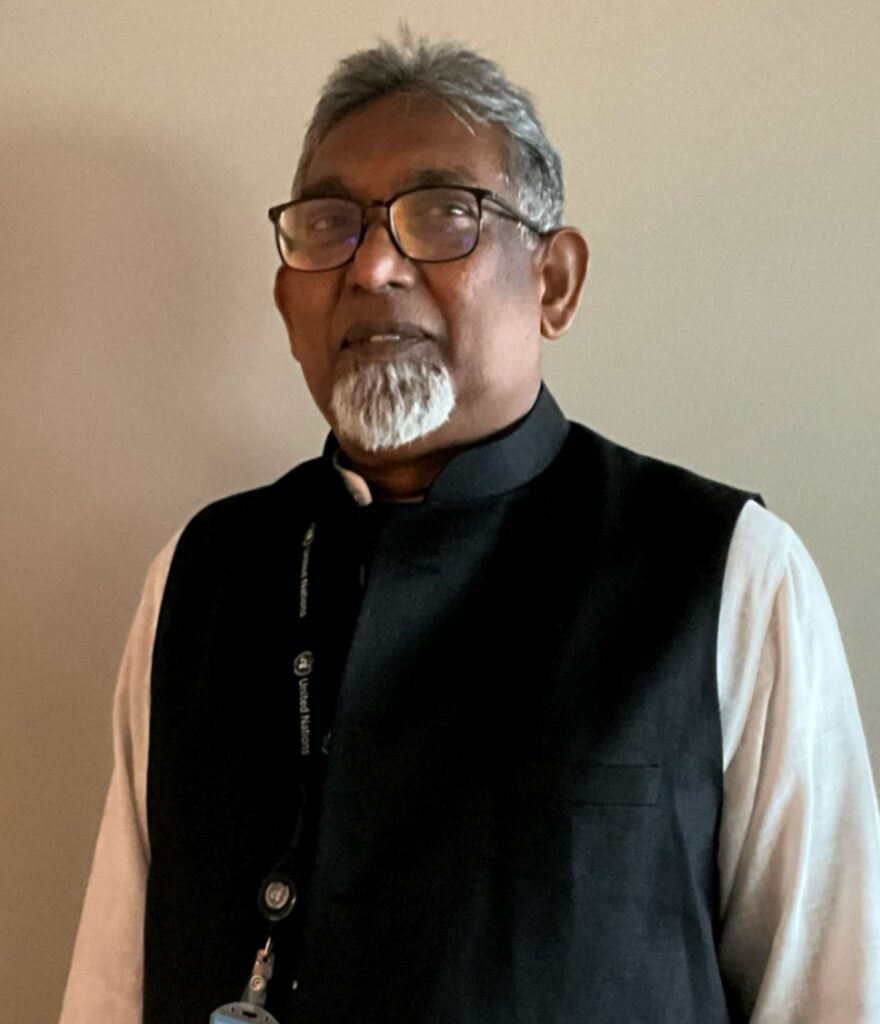
I’m nearing 70 now, and I often reflect on what kind of legacy I want to leave behind. The Inclusivity Project is one part of it. But more than anything, I want to leave behind the wisdom of my father’s words.
Because in a world filled with injustice, we need more than laws. We need compassion. We need courage. We need people who dedicate their lives to the defense of the vulnerable.
If my life has taught me anything, it’s this: Injustice thrives in silence. But when we speak—not just as individuals, but as a global community—we begin to dismantle the systems that silence us.
This is how we turn hate into hope. Grief into action. Silence into justice.
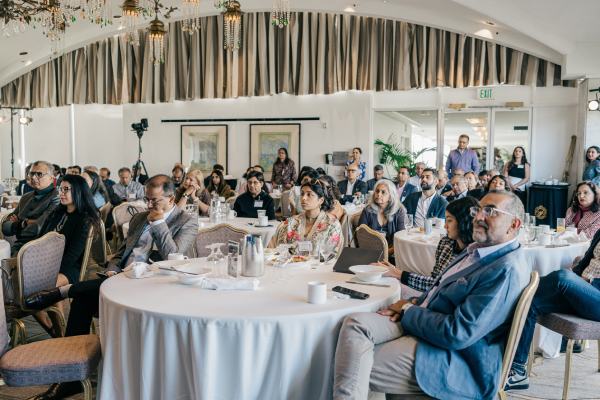
Today, I’m traveling across the U.S., sharing this message at places like Naperville, Illinois and at Jefferson Education Society, meeting with political leaders, civil rights advocates, and community organizers who care deeply about human rights and global solidarity. I see this journey not just as a speaking tour—but as a chance to pass on the legacy of digesting hate towards defending the rights of vulnerable people.
My story began with tragedy. But it continues with purpose. And I hope that purpose lives on, long after I’m gone.