
A few years ago, I walked out of a secure briefing at the White House and was stopped in the hallway by Liz Sherwood-Randall, then the President’s Homeland Security Advisor. She asked if she could get my help with something that was keeping her awake at night.
My first thought was: if this is keeping her awake — given everything she has to worry about — then I must be sleeping far too well.
What followed was a months-long education in how dramatically the biological threat landscape had changed. The proliferation of high-risk laboratories around the world. The accelerating power of tools that could, in the wrong hands, be used to engineer dangerous pathogens. The gap between how fast the threat was evolving and how slowly our defenses were keeping up. The more I learned, the harder it became to sleep. And eventually, that restlessness became BioRadar.
Let me explain what I mean. Three forces are reshaping the biological threat landscape — and they are accelerating. First, zoonotic spillover is well-documented — Zika, Ebola, and COVID-19 are just a few examples in recent memory. One team at the Indian Council of Medical Research found that between 2018 and 2023, the median number of outbreaks of zoonotic diseases each month in India was seven. Environmental change — including deforestation, climate change, and urbanization — will only make animal-to-human transmission more likely. Separately, labs are performing more high-risk work with pathogens across the globe. With this work falling under widely varying regulatory standards, the potential for an event with a lab origin is not negligible.
The threat of a deliberately engineered biological agent — perhaps the most concerning and novel of these factors — grows in step with well-intentioned scientific innovation. CRISPR, a targeted mechanism for gene editing, has promising applications in agriculture and medicine. The Food and Drug Administration approved the first CRISPR-based treatment less than three years ago. In 2025, Indian scientists applied CRISPR to develop new rice varieties resilient to environmental stressors. Recently, artificial intelligence has generated excitement for its potential applications in drug development.
These same technologies, however, could be utilized to deliberately generate a malicious biological agent. In late April, researchers shared with the New York Times conversations they had with generative AI, in which these tools provided detailed instructions on how to generate highly transmissible and treatment-resistant pathogens. A pathogen could be developed to mimic common symptoms, spreading silently for weeks before anyone recognizes the danger.
These scenarios are fearsome, but our greater fear ought to be failing to build the early warning system that could detect a biological threat before it causes widespread upheaval.
As it stands, the approach to detecting harmful pathogens is reactive and segmented. Existing programs, like the Centers for Disease Control’s National Wastewater Surveillance System, search only for pathogens we already know, like the flu or RSV. Syndromic surveillance systems, which report high-level trends in the symptoms reported by patients in emergency rooms, provide meaningful cues. But the signal only arrives after a pathogen has spread widely enough to cause a noticeable surge in patients from within the healthcare system.
The United States, India, and every country that aims to protect its residents from infectious diseases need an approach that is proactive — tracking the threats we know and detecting the ones we don’t.
We are building a comprehensive, AI-enabled biological intelligence platform designed for early warning. Our approach centers on metagenomic sequencing of wastewater. Unlike existing programs, which confirm the presence of threats we already know about, metagenomic sequencing can reveal a much wider range of pathogens. Its value is precisely in uncovering the unexpected. We combine this population-level data with syndromic surveillance feeds — the symptom trends reported from emergency rooms — to build models of what normal biological activity looks like for a community. The system runs continuously. When we know what is normal, any deviation stands out quickly, giving decision-makers real-time situational awareness of potential hazards. In the future, we can make this system even more sensitive by adding behavioral data signals, including trends in pharmacy purchasing.
Without an integrated biosecurity system, we remain vulnerable not only to illness and death, but also to school closures, business disruptions, and economic uncertainty. Matching today’s biological threat landscape requires a twenty-first century early warning system.
The next biological threat may emerge anywhere. The responsibility to detect it early — and stop it before it spreads — belongs to all of us.
To learn more about us and our work, visit BioRadar’s website at bioradarusa.com.
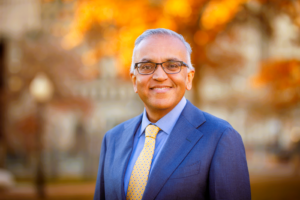
Dr. Ashish K. Jha, MD, MPH is a Co-Founder of BioRadar and a Senior Fellow at the Harvard Kennedy School Belfer Center for Science and International Affairs. In March 2022, he was appointed by President Joe Biden to serve as White House COVID-19 Response Coordinator. Between 2020 and 2025, Dr. Jha was the Dean of the Brown University School of Public Health.