I constantly read about generative AI’s impact on jobs and the importance of AI literacy. I hear the refrain, “AI will not take your job but someone who knows how to use AI will”. Leaders are frantically preparing for shifts in the economy to ensure people are not left behind. Yet, while leaders prepare for the AI economy, another, more fundamental literacy deserves our full attention. Not AI literacy but foundational literacy – the ability to read, write, and comprehend.
The World Bank coined the term learning poverty to describe an ‘urgent learning crisis’ affecting nearly 400m children in Africa and more than 200m in India, Pakistan, and Bangladesh. 9 of 10 children in Africa and parts of the Subcontinent cannot read and understand a simple paragraph by age 10. Despite 5 years of schooling, children are locked out of the curriculum and minimal grade-level competencies. What vaccines are to health, literacy is to education. If you get a ‘boost’ early, you are stronger, healthier and better prepared for life. And unlike health, literacy is intergenerational – parents who read ensure their children can read and the lives of families transform.
Learning poverty is not just an education problem. Illiteracy impacts economic mobility, political stability, gender equality, and the long-term prosperity of nations. And for diaspora communities who have seen firsthand what education can unlock within a single generation, this is an issue that resonates deeply.
Over the past two decades, I have worked with governments, education innovators and impact-driven businesses in India and Sub-Saharan Africa. The patterns are remarkably similar. Large public school systems have successfully filled classrooms with committed teachers and students eager to learn but there is an enormous gap between ‘schooling’ and ‘learning’. Tools like ASER pioneered by Pratham in India and civil society groups like Uwezo in East Africa have shown that attendance does not equate to functional literacy or numeracy. Fewer than 3 in ten children in most global majority countries meet grade level expectations in math and reading.
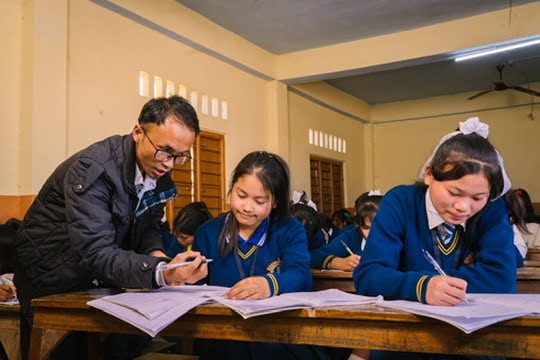

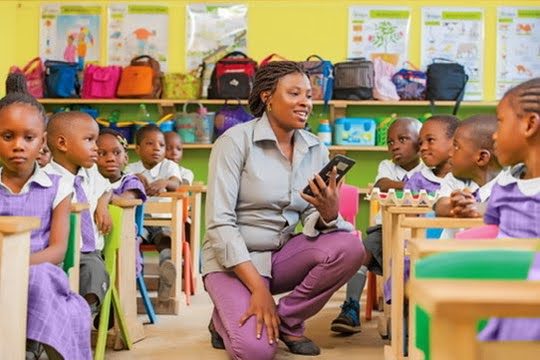

The good news is that there are outliers or positive deviants. Several government-led efforts, for instance, combine measurable learning outcomes, significant reach, and technology to drive down unit costs to reach hundreds of thousands of students. What these approaches share is a relentless focus on measuring results, the use of evidence to inform policy, and robust school management systems driven by granular, high quality and high frequency data.
These programs outperform their country peers by large margins, invest in institutional strengthening and deploying technologies tailored for low-bandwidth and energy-scarce environments. Notable features include:
- – Low-cost and low-power hardware that works offline and inexpensive to repair
- – A focus on measuring learning gains with high quality and high frequency data
- – Strong emphasis on teacher training, coaching, and frequent feedback loops
- – Fit-for-purpose digital platforms like small AI models that are low-cost to deploy
- – A drive to lower unit costs to reach more students in less time
Jugaad for the 21st century.
It’s about adapting what works and finding the models, tools and approaches that are proven, measurable, and cost-efficient for governments to deploy at scale. This is where the opportunity for the diaspora becomes powerful.
I have seen programs that reach millions of children—but the scale of the problem is in the tens of millions in countries like India, Pakistan, Nigeria, and the DRC. There are programs today that deliver outsized improvements in literacy and numeracy – achieving 1 or 2 years of additional learning gains (EYS) in a single year. Innovations from India are relevant to Africa and the inverse is also true. What works in highly resource constrained environments with low bandwidth, limited electricity, and a scarcity of trained teachers can work in many countries globally. Although ‘ed-tech’ is no silver bullet, the digitization of curricula, teacher training and coaching, the use of data to adapt lesson plans, track student progress, and improve school management is showing remarkable results. The Gates Foundation has reinforced the message that foundational learning and guided lesson plans for teachers, often on very low-cost tablets, yield some highest returns in global education.
Creating a two-way exchange. India to the world and the world to India.
Scaling what works requires more than good intentions. It demands a different kind of philanthropy – not charity or traditional grantmaking. We need philanthropy shaped by the instincts of entrepreneurs—people who ask about cost curves, data systems, learning gains, and how to reach the “9 out of 10 children” who are being left behind much faster.
This ‘catalytic philanthropy’ is already emerging within the diaspora. Many founders and operators see philanthropy not as charity but as another domain for problem-solving, experimentation, and tracking measurable outcomes. Indiaspora’s own “philanthropreneurship” and the effective altruism community tap directly into this energy.
Imagine what is possible if more of the diaspora applied that mindset to the global literacy challenge. With 35 million people of Indian origin worldwide—representing close to $1 trillion in economic power—we have the collective capacity to help drive learning gains not only in India, but in Africa, South Asia, the Middle East and North Africa, and beyond.
The timing is right. Governments increasingly understand that early learning and literacy is a pre-condition for economic growth and broad-based prosperity. The use of digital tools and adaptive learning allows us to meet children ‘where they are’. Students can master concepts at their own pace. Where there is a shortage of qualified teachers, low-cost hardware and software can augment classroom learning and help students fill gaps in their own learning.
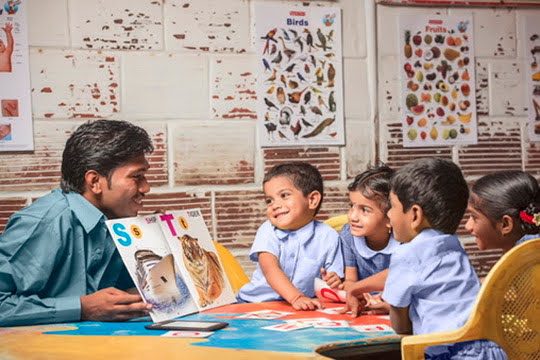
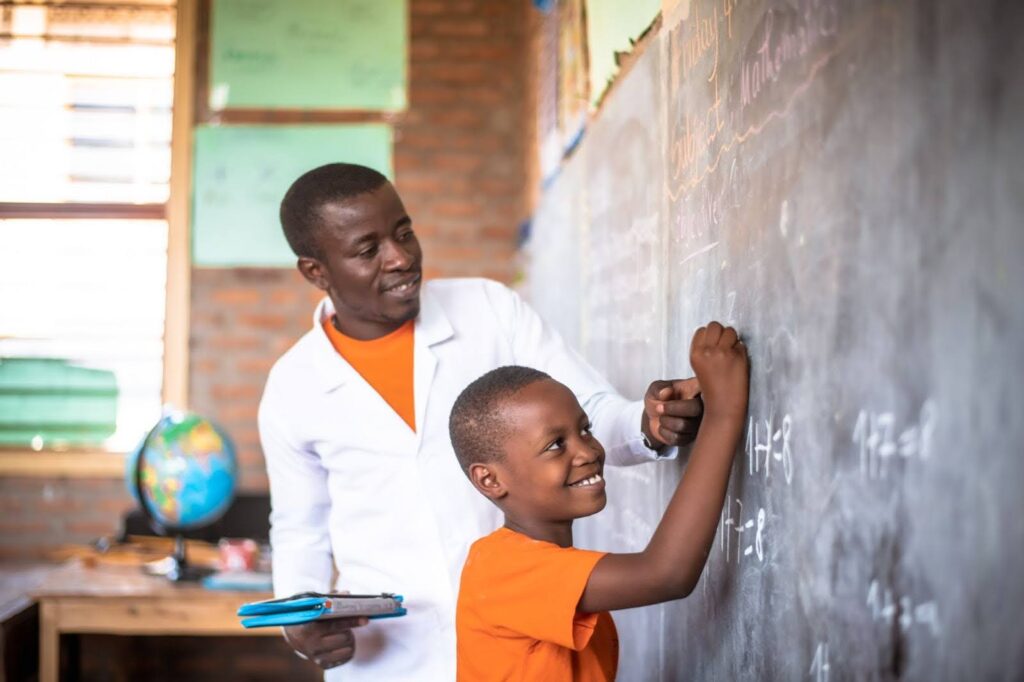

The next powerful opportunity is to build an India–Africa learning corridor. Imagine educators, technologists, and innovators from both continents co-creating models, sharing ideas, and enriching talent? What if diaspora leaders used their networks not just to fund programs but to help shape policies and strengthen institutions that serve millions? To solve this problem at scale, we need the energy and imagination of entrepreneurs and the footprint of tens of thousands of public schools. Without a partnership driven by highly motivated and ethical public sector leaders working with private sector innovators, we will not be able to solve this problem at the speed and scale we owe a generation of children.
Imagine the global economic and social dividend if improving literacy and numeracy became a signature cause for the diaspora? For a community that has always believed in the power of education, this feels like a natural next chapter.
This may be one of the greatest contributions the diaspora can make, not just to India, but to the world.
For more information, please contact info@5in5.education.
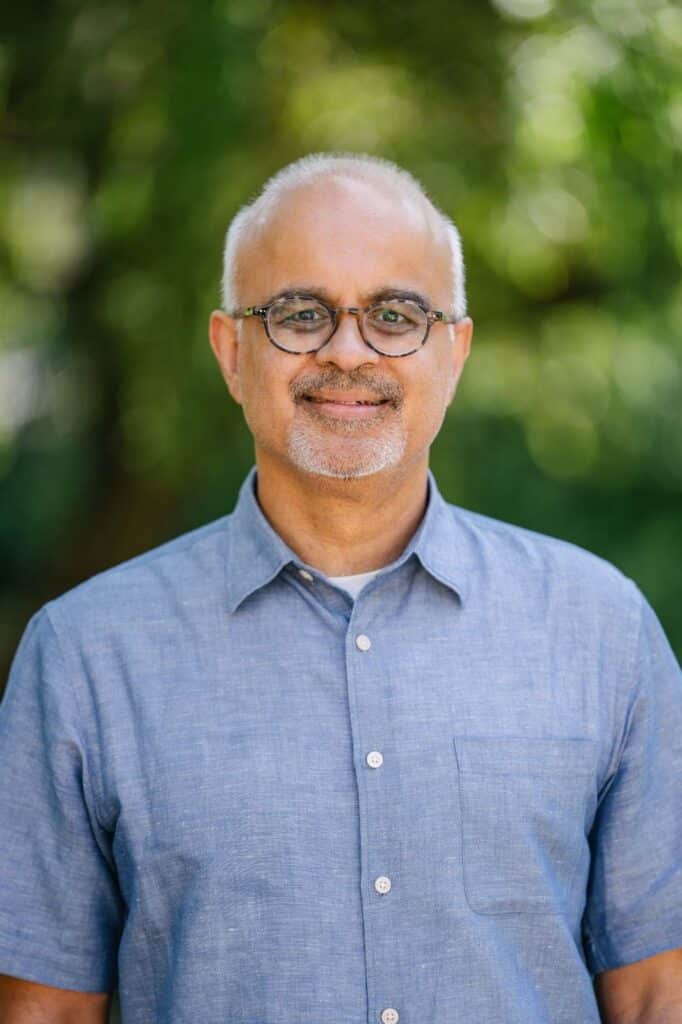
Aleem Walji is the Founding CEO of the 5in5 Impact Alliance. 5in5 is a nonprofit platform dedicated to ending learning poverty for 5 million children in 5 years, with a focus on dramatically improving literacy and numeracy in Africa and Asia. 5in5 is bringing together impact-first enterprises, philanthropists, investors, and governments committed to innovations in literacy and numeracy and reaching more children in less time.

India, Manipur, Star Education, Rwanda, RwandaEQUIP videos are here.
Selection of Images from schools India, West Africa