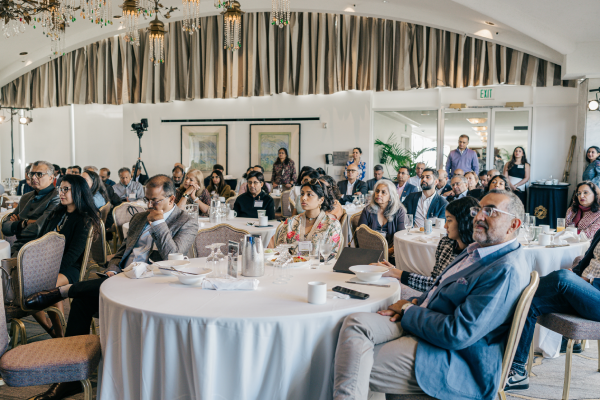
I was born in Kolkata and left for America at sixteen. Like so many of us in the diaspora, I carried India with me. I knew far less of its history than I wish I had. I became a physician, picked up a camera late in life, and only then went back to look.
In Hindu worship, darshan means seeing the divine, being seen in return, and being blessed in the seeing. That felt like the right word for what happened to me.
It became the name of two projects, books named DARSHAN INDIA and DARSHAN ASIA, and, I hope, museum and gallery exhibitions of prints so large you could almost walk into them, and for a moment feel you are standing there yourself.
DARSHAN INDIA explores India’s own heritage; DARSHAN ASIA follows its religions, symbols and temple architecture along the old routes of trade and faith to twelve countries across Asia, from Sri Lanka and Nepal to Cambodia, Indonesia, Japan and others.
Each book has been six to seven years in the making and is now about two-thirds complete. Each will be a large-format book, pairing 108 black and white photographs with a short essay on the facing page. Together they cover every faith that has made its home in India, from Hinduism, Buddhism, Jainism and Sikhism, born here, to Judaism, Christianity, Islam, Zoroastrianism and others that arrived and took root.
The photographs
My photographs are rarely the image a tourist takes home. I look for a detail, a fall of light, an angle that shows a place the way I felt it. Most are deliberately made without people in them. A photograph filled with other visitors turns the viewer into a spectator, watching someone else’s experience. An empty one leaves room for yours: a silent space of communion, where you become the one standing there, not observing the space but being part of it.
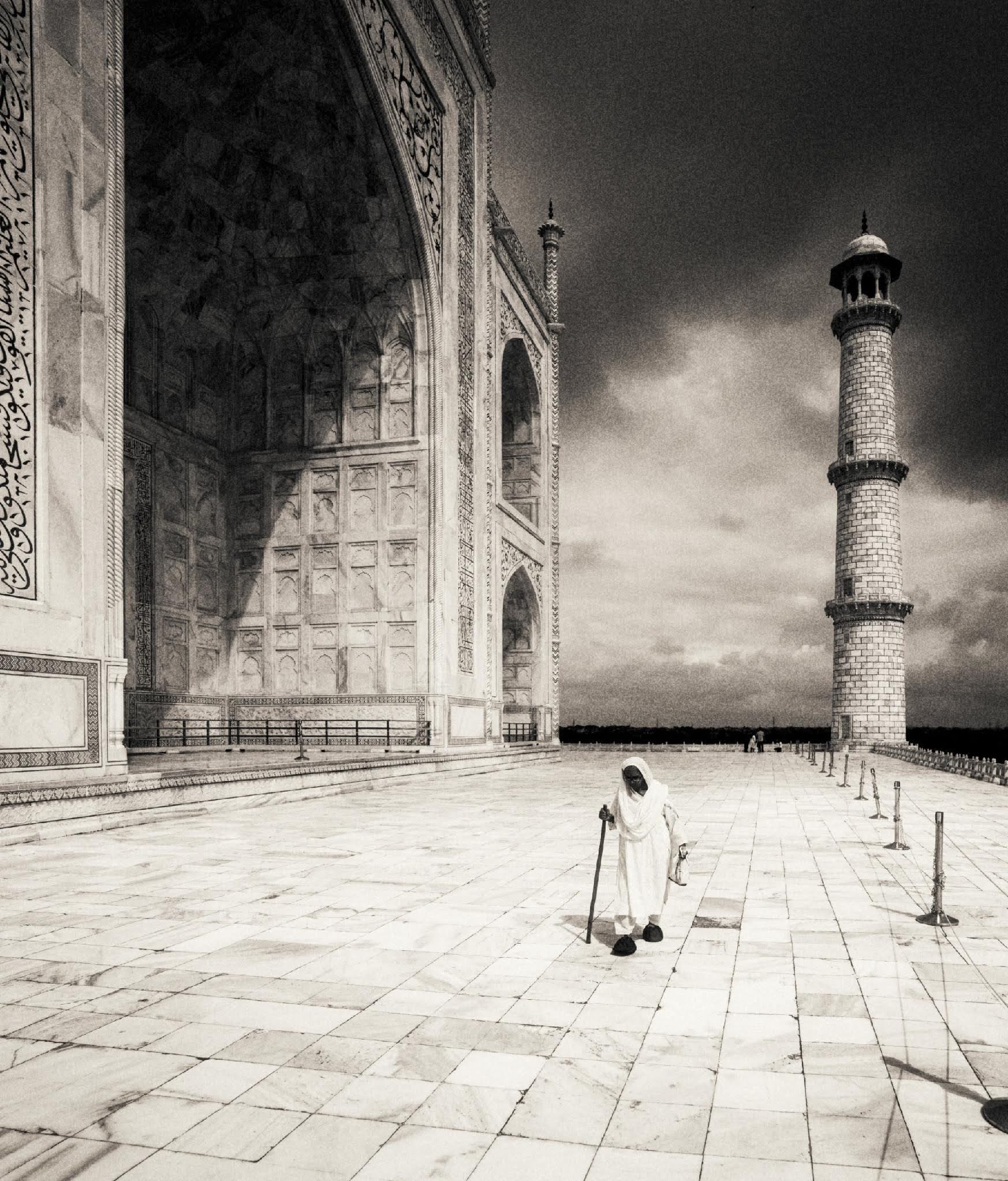
From photographs to stories
The project began as a book of photographs. But when I shared the images, I noticed that people admired them and moved on. Without the story of the place, they had nothing to hold on to. A carved bull in a dark cave is beautiful. It means much more once you know who he is, and why he has sat there for centuries, never taking his eyes off his god.
So I started reading about each place, and the stories became as important to me as the pictures. The more I read, the more I came across stories in places that are hardly photogenic at all. Nalanda, in Bihar, is a field of brick ruins today, yet it is often called the world’s first residential university, drawing students from across Asia more than six centuries before Bologna and Oxford. At Lothal, in Gujarat, a 4,000-year-old dockyard is little more than a basin of brick, but it reminds us how central India was to ancient sea trade, something historians have come to understand much better in recent decades. Some of my locations were chosen for their beauty. Others were chosen because the stories there were so compelling that they had to be told.
The essays
I photograph and write with three readers in mind: the Westerner meeting India for the first time; the diaspora reader like me, finding a way back to a heritage we grew up near; and the reader in India who knows their own region well but may not know an obscure or faraway place, or an interesting detail.
The photographs and essays straddle the middle ground between Bollywood infotainment and a dense history textbook: photographs visually engaging enough to capture your attention, and essays interesting enough to make you want to explore further. That gives me the freedom to write an essay that explains the photograph on the facing page, or one that follows a thread only loosely tied to it, and sometimes to wander from one idea to the next.
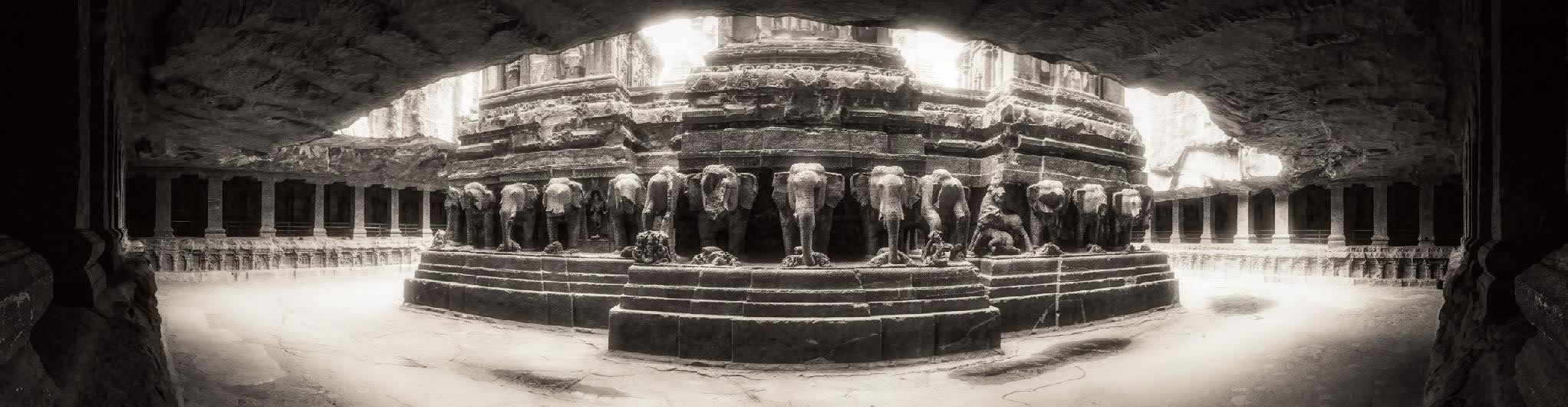
Among the places, and the stories they hold: rock paintings at Bhimbetka, layered over thousands of years; India’s oldest rooms at Barabar, polished granite that still echoes; a temple floor at Hampi worn hollow by thirteen centuries of bare feet. There is Khajuraho, famous for the wrong reason; the meaning of Harihara at Badami; Srirangam and the roots of Carnatic music; and Rani Lakshmibai of Jhansi, with the lineage of warrior queens who came before and after her. There is a sacred forest of eighty shrines at Bateshwar, and the Kailash Temple at Ellora, often called the world’s largest monolithic structure, its elephant frieze pictured here.
Each essay gives the age of a place rather than a date. I find an age helps you feel the distance between yourself and the people who made the thing. We are also building a timeline for the books that shows what else was happening in the world at the same moment. Ashoka, for example, carved edicts urging respect for other faiths more than two thousand years before the American Bill of Rights. What else was being built around the world then? Placed side by side, the dates make a point the essays never need to state.
Why it matters
Many of our children know India as a place of grandparents, weddings and holidays. It is that, but it is also the civilization that measured the heavens at Jantar Mantar, gave the world the zero, carved theology into rock, and carried its culture, ideas and religions across Asia. Heritage is not nostalgia. It is knowledge, and it is ours to pass on.
That is why my goal is to partner with a philanthropic organization in India to distribute these books free of charge to colleges and universities around the world, and to high schools and libraries across India. I do not plan to keep any profit from this project; whatever it earns will go back into printing and distributing more books.
I hope that when my children and grandchildren, and yours as well, turn the pages of these books, one image will capture their imagination and they will ask us to take them there. For this experience, my friends — the seeing of these ancient places through their fresh eyes — will undoubtedly be the ultimate form of DARSHAN.
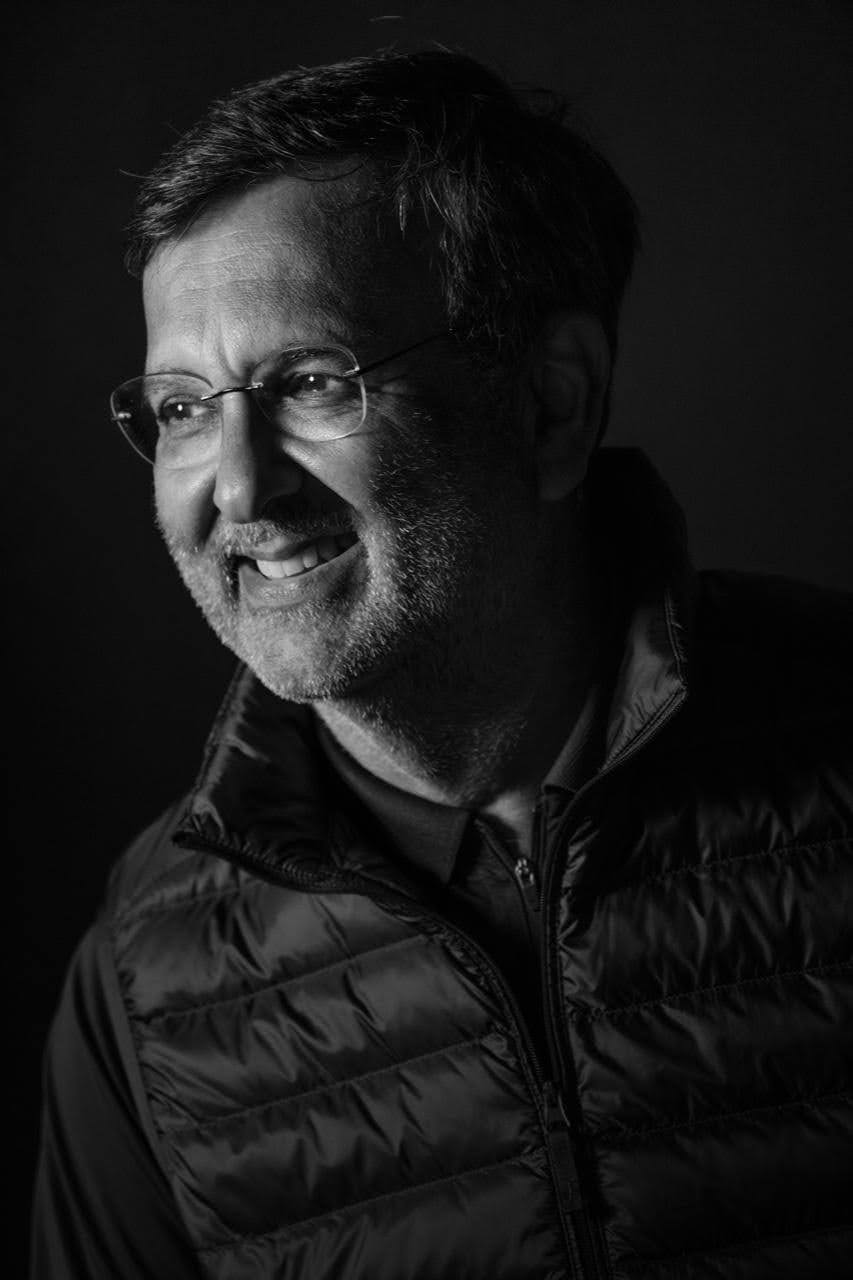 DARSHAN INDIA and DARSHAN ASIA are in progress. To see more of the work, visit ArunPatelStudio.com, and please consider following my progress on Instagram at @ArunPatelStudio. I would love to hear from you at ArunPatelStudio@gmail.com.
Arun Patel is a photographer based in Sacramento, California. Born and raised in Kolkata, he practiced medicine in the United States before turning to photography; his earlier books include NAMASTE: To all the Trees, SHANTI: The Sea Ranch and beyond, and VARUNA: Wind, Water and Cosmic Order. He is now at work on DARSHAN INDIA and DARSHAN ASIA, two volumes of 108 photographs and essays on the heritage of India and Asia, with photography trips to South Korea and Kerala coming next.