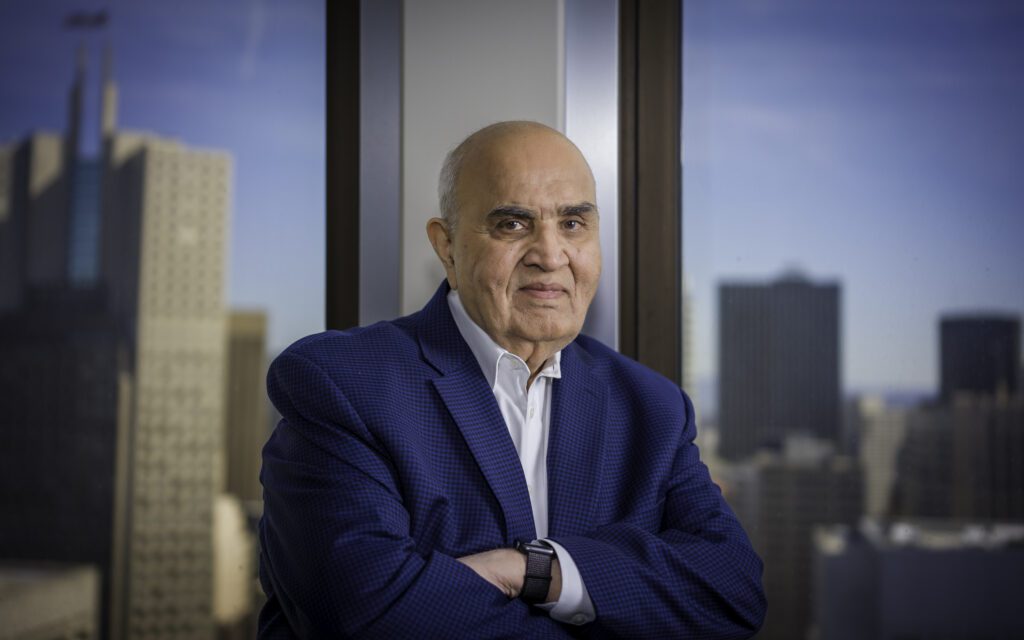

In the early 1980s, I sat across from a venture capitalist who asked me a question that would define the next four decades of my life: “Who’s going to buy from you? Will white guys work for you?”. Back then, the conventional wisdom was that Indians were great technical minds but could never be managers, let alone CEOs. I was an Indian engineer with dark skin, a thick accent, and a childhood speech impediment. To the Silicon Valley gatekeepers, I was an “unsuitable” candidate for leadership.
But I’ve always believed that when you are underestimated, you have a secret advantage. Due to a speech impediment and puny frame, my father never believed in me. It was clear I wouldn’t follow in his footsteps into the army, and he couldn’t see me competing for government jobs either. He essentially wrote me off, and because he expected nothing of me, he was shocked when I got into IIT. So a skeptical board of directors was just another group that would end up being surprised I could achieve things no one expected of me.
Today, as I look at the news, I see echoes of that same skepticism towards Indian-Americans. We hear reports of growing concerns over how Indians in America are being treated, and there are headlines suggesting the US-India relationship has hit a rocky patch over the last year. These are not just abstract geopolitical shifts, they are felt in the lives of the students and entrepreneurs I mentor every day.
But I have a message for those who are anxious: we have been here before. America, land of immigrants, has ironically always had a love-hate relationship with immigrants. The Irish, Italians, Germans, Jews, Asians… Indians are just the latest in a long lineage of immigrants who have had to prove themselves over time.
When I arrived in New York in 1967, India was in the midst of a famine. We were seen as a nation of beggars and snake charmers sustained by US foreign aid. India was often the most anti-American voice at the United Nations (due to the Vietnam War), and skewed socialist during the Cold War. The relationship was as strained then as it has ever been. Yet, even in that climate, the door to immigration was opened by the Hart-Celler Act because America realized it needed brainpower to win the Cold War and reach the moon.
I’ve seen this cycle repeat. I’ve lived through the “stagflation” of the 1970s and the dot-com crash of 2000. I was laid off from three jobs and had my character questioned by board members who used slurs I won’t repeat. Each time, people predicted the end of the “American Dream” or the collapse of the partnership between our two nations. And each time, those predictions were wrong.
Why? Because the US needs India, and India needs the US. It is a “new power triangle” between the US, China, and India where India is the tiebreaker. We are natural allies bound by the shared values of democracy and free-market capitalism. The US remains the world’s greatest laboratory for innovation, and the Indian diaspora has become its most potent “knowledge-based” fuel.
Things have always gotten better because we make them better. When the telecom industry in India was strangled by government monopoly, we lobbied for liberalization and changed the law in 2000. Five years later, we organized like never before to pass the US-India Civil Nuclear Accord, realizing that we could shape the future rather than just observe it.
We are in the middle of a seismic shift, yes. But the arc of history is moving toward abundance, not scarcity. As long as there are dreamers who ask “Why not me?” and as long as our two democracies remain open to the “change agents” of the world, we will be fine. History ebbs and flows, but progress is constant. The road may be detoured now and again, but the destination remains the same: liberty and justice for all.
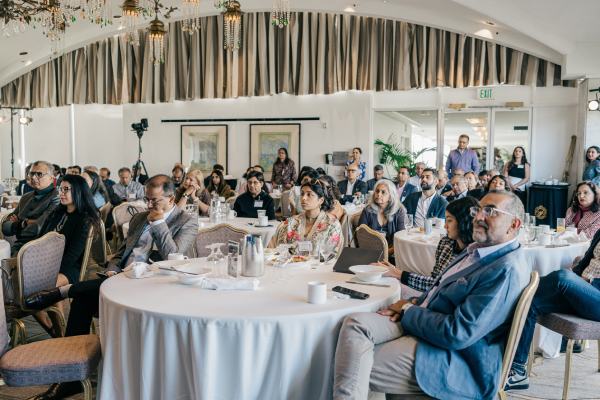
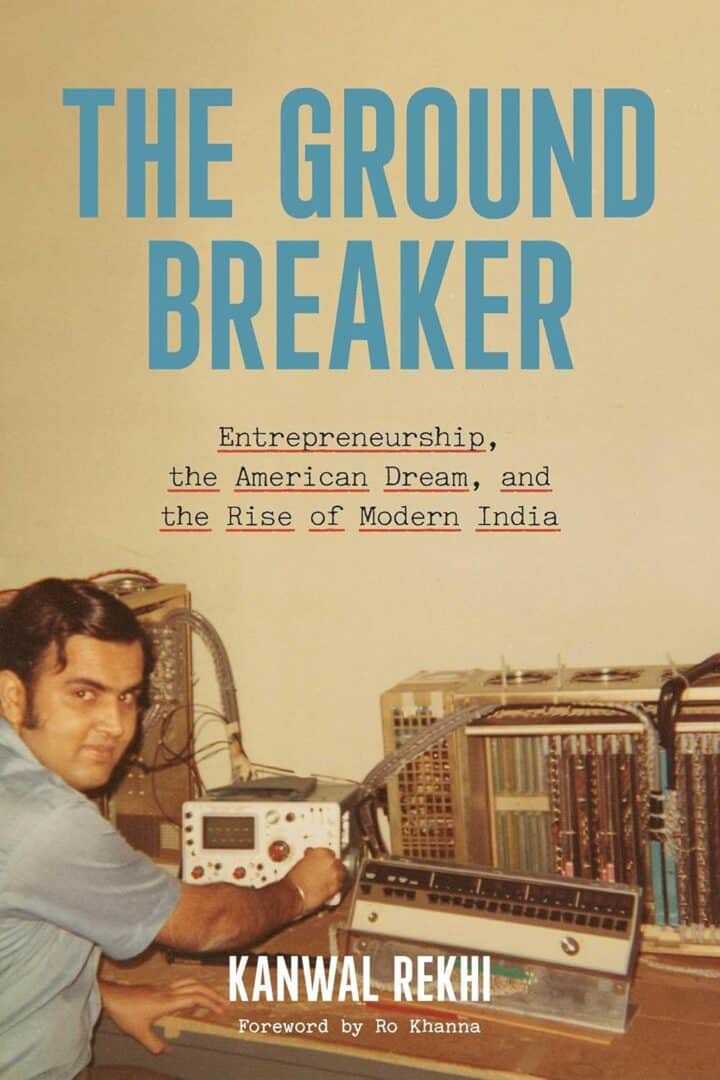
If you are in the Bay Area, please join us for the March 5th Book Launch at the Commonwealth Club in SF. Kanwal will be in conversation with former White House Data Scientist DJ Patil, with a reception to follow.