
India’s journey from Independence to becoming one of the world’s leading scientific and technological nations is among the most remarkable transformations in modern history. At Independence, the country faced food shortages, low industrial capacity, widespread poverty, and limited scientific infrastructure. The literacy rate was only around 12%, with an even smaller proportion of the population having access to higher education—particularly in science and technology—and life expectancy was below 35 years. Yet, through visionary leadership and sustained investments, first in education and then Research & Development (R&D) in science and technology, India built a strong knowledge ecosystem that has shaped its economic and social progress over the decades.
This transformation was driven by institutions dedicated to fundamental science, engineering, agriculture, medicine, and technology. Institutions such as the Indian Institutes of Technology (IIT), Indian Institute of Science (IISc), Tata Institute of Fundamental Research (TIFR), Council of Scientific and Industrial Research (CSIR), Indian Space Research Organisation (ISRO), and Indian Council of Agricultural Research (ICAR) nurtured generations of scientists, engineers, and innovators who addressed India’s most pressing societal challenges.
Among these institutions that profoundly shaped India’s scientific landscape, the Tata Institute of Fundamental Research (TIFR) occupies a foundational place. Established in 1945 under the vision of Homi J. Bhabha, TIFR became the cradle of modern scientific research in independent India. TIFR’s emphasis on excellence in fundamental science created a culture of inquiry and innovation that continues to influence India’s scientific ecosystem today. In the context of social impact, the legacy of building indigenous cutting-edge instruments at TIFR lead to India building its first digital computer as early as in 1950s, which was used by almost all major business houses of the time, in addition to academic users. TIFR led the path to establish Electronics Corporation of India Limited (ECIL), National Informatics Centre (NIC), Centre for Development of Advanced Computing (C-DAC). Subsequently, all these initiatives catalysed IITs to offer undergraduate degrees in Computer Science. Indian students fuelled the global IT revolution and transformed India into a hub for IT services. India’s significant role is exemplified by the fact that it was only the fourth country, after the UK, USA, and Canada, to offer degree programmes in Computer Science. Among institutions and universities globally, IIT Kanpur was just the fifth to offer a degree programme in the discipline. Beyond computer science, TIFR led the country and often pioneered globally advanced research in astrophysics, astronomy, radio astronomy, gravitational physics, particle physics, string theory, mathematics, chemistry, and biology. In each discipline and sub-discipline, TIFR scientists stood shoulder to shoulder with the best in the world.
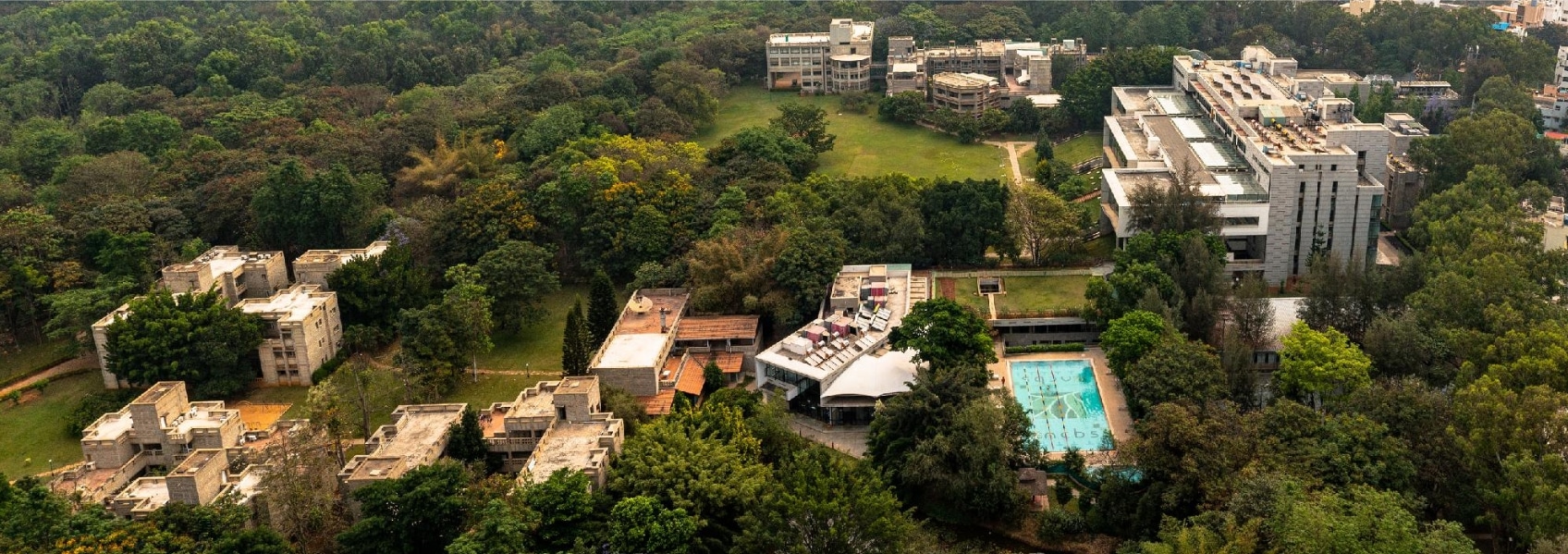
Building on this legacy, the National Centre for Biological Sciences (NCBS-TIFR), a centre of TIFR, has emerged as one of India’s leading institutions conducting cutting-edge research across the full spectrum of modern biology — from molecules and cells to organisms, ecosystems, and populations — integrating advanced experimental, computational, and theoretical approaches. The institute is home to world-class researchers leading pioneering work in structural biology, cell and molecular biology, microbiology, neuroscience, developmental biology, ecology, and biodiversity science.
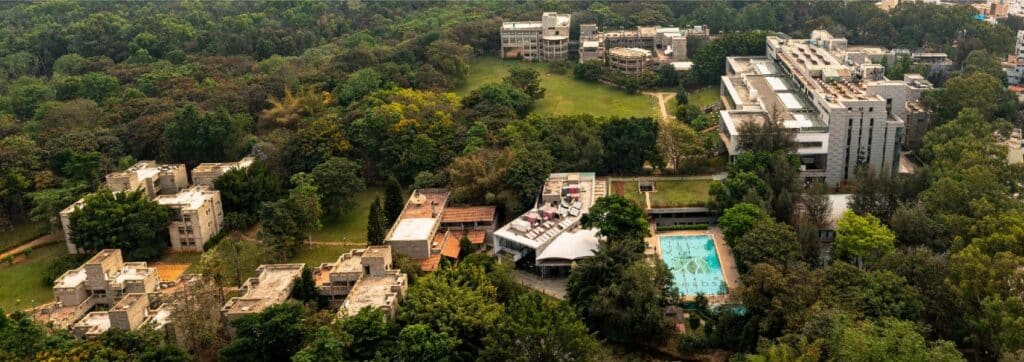
Through cutting-edge work in areas such as neuroscience, ecology, evolution, genetics, infectious diseases, and quantitative biology, NCBS has contributed significantly to strengthening India’s capabilities in life sciences and biotechnology. Major scientific contributions from NCBS include insights into the structure–function relationships of biological membranes across different cell types; mechanisms underlying protein folding; the origins and evolution of cellular organelles; neural mechanisms governing olfactory and visual perception; epigenetic regulation of salinity resistance in plants; evolutionary mechanisms associated with mimicry in butterflies; conservation strategies for large mammals such as tigers in the context of habitat fragmentation and inbreeding; and understanding carbon cycles and ecosystem dynamics.
Equally important has been NCBS’s role in establishing India’s major biotechnology ecosystem in Bengaluru catalysing the establishment of applied and translational research institutions such as Institute for Stem Cell Science and Regenerative Medicine (inStem), Centre for Cellular and Molecular Platforms (C-CAMP) and Tata Institute for Genetics and Society (TIGS).
Together, TIFR and NCBS exemplify how sustained investment in fundamental science institutions can generate long-term national impact, driving both scientific excellence and broader societal and economic progress.
Building on over three decades of global excellence, NCBS now looks toward advancing frontier biological research through the generation of new knowledge, development of next-generation computational and experimental platforms, and catalysing mission-oriented programmes in fundamental science spanning the origins of life, evolution, cell physiology, and ecology. These efforts are expected to translate into solutions for pressing societal challenges related to food security, health, nutrition, sustainability, and the environment through strong collaborations with medical, public health, and agricultural institutions.
This remarkable journey of growth of fundamental science institutions of the country underscores a larger truth: economic growth and societal transformation are inseparable from investments in science and technology, both at the fundamental and translational levels. A strong foundation in fundamental science creates a vibrant research ecosystem; a strong research ecosystem strengthens education and innovation; and a scientifically informed society is better equipped to solve complex national challenges. India’s experience demonstrates that sustained support for science and technology is not merely an investment in knowledge, but an investment in national development, resilience, and the future of society itself.
A major factor for the success of American S&T is their post-doctoral program. Well trained early career research fellows moved to USA as post-doctoral fellows from all over the world, particularly from India and China, accelerating scientific discoveries in USA. Going forward, NCBS would like to be a go to place for post-doctoral fellows and contribute to Indian science exponentially.
As we move forward pursuing our goals and aspirations, we seek generous philanthropic support to accelerate our ability to deliver S&T-based solutions through fundamental science to India’s needs.